Last year I stopped sowing seeds once summer got going. The last thing to come out of the garden was the pumpkin patch in October, and after that the beds were bare. Nothing else was growing, so I went back to buying veg from the shop like everyone else.
This year I want to do it differently. I’d like something coming out of the garden all year round, winter included, and that means getting seeds in now rather than waiting for spring.
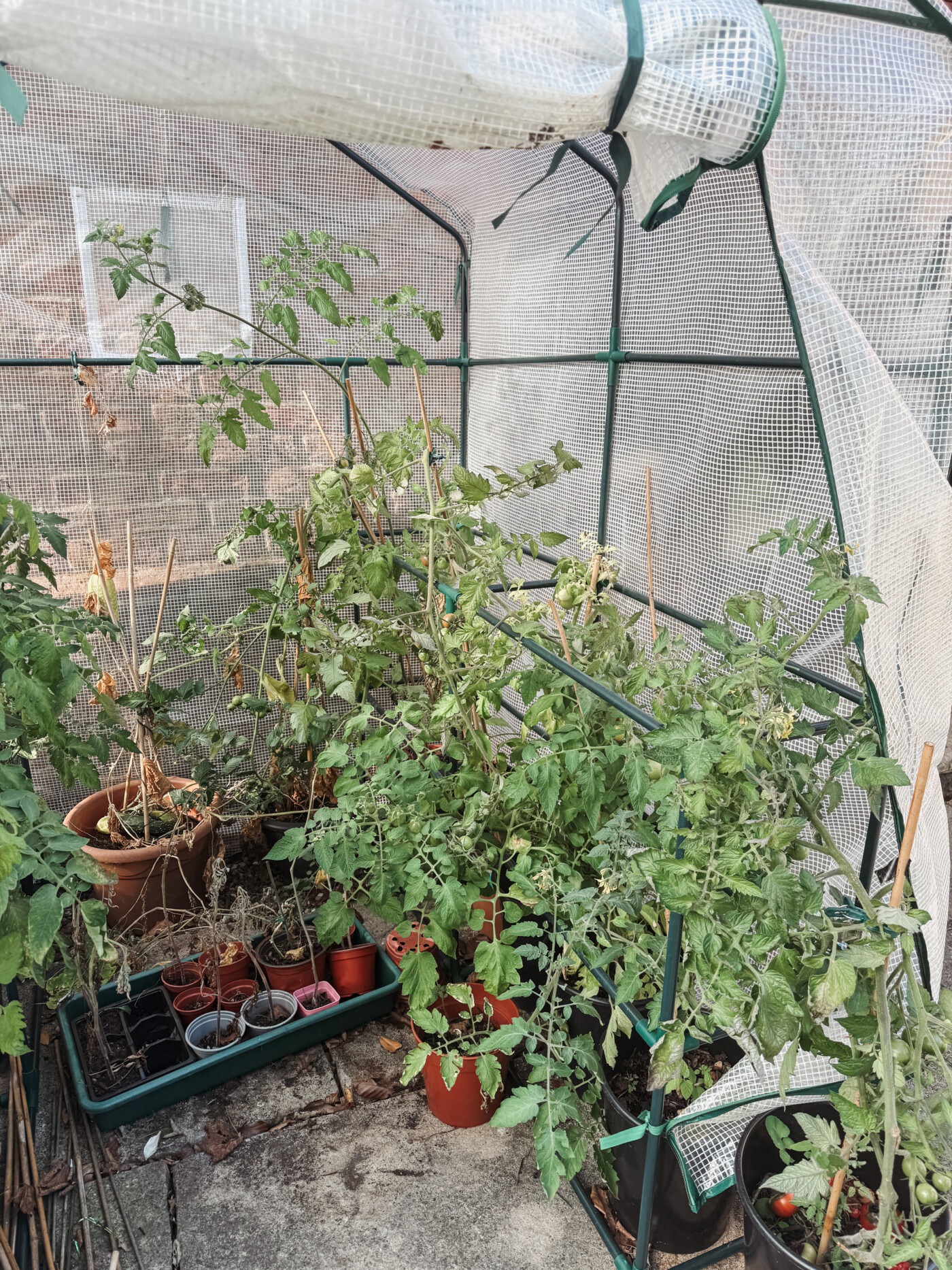
At the moment I’ve still got tomatoes, courgettes, butternut squash and a few other pumpkins and squash on the go (there’s more in my August garden update). The tomatoes are only just going red, which is late. I sowed them in plenty of time, but I left potting them up for far too long, so they sat in small pots when they should have been moved on. I really hate potting up (filling all those pots with compost takes ages), so next year I’m getting the pots filled and ready beforehand. I started doing that this year and it made things so much easier. Anyway, back to September.

Why I’m Growing More This Year
Part of it is the continuous crop idea. I like the thought of walking outside in February and picking something.
The other part is a bit more serious. The Environment Secretary has said households should stock up on food as a very strong El Niño develops, which she expects to bring drier summers, wetter winters and more extreme storms to the UK. The National Audit Office has also warned that Britain’s food supply chain is at risk, and that disruption could push up prices. I’m not panicking, but it made me realise how little of my own food I grow. A few more rows of veg won’t make me self-sufficient (I’m nowhere near), but it’s a start, and it’s cheaper than buying it.
What To Sow In September
I’ve been through my seed packets and ordered a few extras, which are on their way. Some of these can go straight into the ground now, some need a seed tray and a bit of shelter, and a few (garlic, onions and broad beans) are better left until October, so they’ve got their own section further down.
One thing to bear in mind is that I’m in North Yorkshire, so our first frosts can turn up earlier than they do in the south. If you’re somewhere colder too, keep some fleece or a cloche handy.
Spinach
I already had a packet of this. Sow it where it’s going to stay, in a sunny or partly shaded spot with well-drained soil, about 2cm deep in rows roughly 30cm apart. Thin the seedlings to about 10cm as they come up (the thinnings are edible, so nothing goes to waste). Spinach doesn’t love being moved, so sowing it straight into the ground is the easiest way.
Pick the outer leaves as it grows and leave the middle to keep producing. Once the nights turn cold, a cloche or a bit of fleece over the top will keep it going into winter.
Radish
I had a packet of radish already and I’ve ordered Pink Beauty too. Radishes are quick, ready in about four to six weeks, and the cooler weather in autumn suits them better than the heat of midsummer, so they’re less likely to bolt.
Sow thinly, about 1cm deep, straight into the ground or into a pot, and thin to roughly 2.5cm apart. Sow a short row every couple of weeks rather than the whole packet in one go, or you’ll end up with forty radishes at once.
Lettuce: Arctic King
Arctic King is a butterhead lettuce bred for autumn sowing and it’s very hardy, which is exactly what I’m after. It’s sown from August into September and it’s not a quick one. You’re looking at a harvest from March to May, so this is a lettuce for next spring.
Sow thinly, about 1.5cm deep, then thin the seedlings to somewhere between 25cm and 30cm apart. That sounds like loads of space, but they make big heads. If you’d rather start them off under cover, a cold frame or seed tray works too, and you can plant them out in spring. Put a cloche over them in really cold weather, and keep an eye out for slugs and birds when the plants start to look tempting.
Pak Choi: Mei Qing Choi
Pak choi is one of the fastest things on this list, ready in around six to eight weeks, so it’s worth sowing early in September to give it time before the cold. Sow about 1cm deep in a seed tray or module, or straight into the ground, and space the plants 15cm to 20cm apart.
Slugs adore it, so I’d cover it with fleece or mesh. Once October nights arrive, somewhere sheltered like a cold frame, greenhouse or under a cloche will keep it snug.
Cauliflower: All The Year Round
This is another one I already had. Autumn is the time to sow it in seed trays or modules, about 1cm to 2cm deep in seed compost. Keep the compost moist, then thin to one seedling per module once they’re up.
Here’s the bit that’s easy to miss: it isn’t planted out until March. The seedlings spend the winter in a cold frame or unheated greenhouse, then go out about 45cm apart, and you can cut them from around June. If you haven’t got a cold frame, find the most sheltered spot you can and keep fleece to hand. Harden the plants off gradually before they go outside for good.
Calabrese: Marathon
Marathon can be sown in September too, and it follows the same routine as the cauliflower. Sow in seed trays, grow the seedlings on somewhere cold but protected over winter, and plant them out in early March. Space them about 45cm apart and, if all goes well, you’ll be cutting heads from June. Once you’ve cut the main head, it keeps sending up smaller side shoots, so it’s a good value plant.
Carrots: The Awkward Ones
Carrots are the tricky bit. I’ve ordered Chantenay Red Core, which is usually sold as an April to August sowing, although SimplySeed does list it under its September sowings. Either way, a September sowing outdoors won’t have time to make full-size roots before winter, and it needs some protection from the cold.
If you want carrots in September, the trick is to sow under cover and choose a variety that suits it. These are the ones recommended for a September sowing:
Early Nantes: sweet, tender roots when grown under cover.
Amsterdam Forcing: ideal for early finger carrots, and it copes well with cold protection.
Adelaide F1: suitable for protected late sowings, to harvest early the following spring.
Chantenay Red Core is a short, stubby carrot that’s known for being sweet when picked as a baby carrot, so it’s the best fit of mine for a September sowing. Sow it thinly in a deep pot or a greenhouse or cold frame bed, and expect small, sweet carrots rather than big ones. Carrots don’t like being transplanted, so sow them where they’re staying, and if you have to thin them, do it in the evening to keep carrot fly away.
More Veg You Can Sow In September
Not everything you can sow this month is on my list, so here are a few other crops that can go in now. Most of them are salad leaves and quick growers, which suits a September sowing. Check the packet for your own sowing window, as it varies by variety.
More Winter Lettuce
Arctic King isn’t the only lettuce that copes with the cold. Hardy winter varieties such as Winter Density (a small cos type) and Valdor are sown from late summer into autumn too. Sow thinly, about 1cm deep, thin to around 20cm to 25cm, and pop a cloche over them in a cold snap. Sow a few short rows a fortnight apart and you’ll get a longer picking season.
Corn Salad (Lamb’s Lettuce)
This one is very hardy and copes with frost better than most salad leaves. Sow it from August to October, about 1cm deep, and thin the seedlings to roughly 10cm apart. It can be slow to come up, so give it a couple of weeks before you start worrying. You’ll get small rosettes to pick through the colder months.
Winter Purslane (Claytonia)
Winter purslane is a hardy salad crop that does well in cool, damp weather and puts up with a bit of shade. Sow thinly from September into October, and cut the leaves when they’re big enough to pick. Cut them and they’ll grow back. It’s a good one for a pot or a shady corner where lettuce wouldn’t be happy.
Rocket
Rocket is quick, ready in about four to six weeks, and the cooler weather in autumn tends to suit it. Sow thinly, about 1cm deep, straight into the ground or a pot. If you want to keep picking it into winter, cover it with a cloche or grow it under cover.
Oriental Leaves: Mizuna, Mustard And Komatsuna
These are some of the easiest things to sow this month. Scatter or sow thinly in rows, about 1cm deep, and start cutting as baby leaves in three to six weeks. They grow back after cutting, so you can keep going. They also cope with the cooler weather better than lettuce, so they’re less likely to bolt.
Spring Onions
Winter-hardy spring onions such as White Lisbon Winter Hardy can be sown in late summer and early autumn for picking in spring. Sow thinly, about 1cm deep, in rows around 15cm apart. They’re slow over winter, but they’re worth it when nothing else is ready.
Green Manures For Empty Beds
This one isn’t for eating, but it’s worth knowing about if you’ve got bare soil once the summer crops come out.
A green manure is a fast-growing plant that you sow to cover the soil over winter, then cut down and dig back in before it goes to seed. Think of it as feeding the soil rather than the plate. Bare soil takes a battering from winter rain, which washes nutrients away and leaves the ground compacted, and weeds are quick to move into any gap. A green manure covers the ground so that doesn’t happen.
When you dig it in, it rots down and adds organic matter, which helps the soil hold onto water and nutrients and keeps it crumbly and easier to work. Some green manures, like field beans, also add nitrogen to the soil, which is handy for hungry crops like brassicas and squash the following year. Others, like grazing rye, have deep roots that help break up compacted soil.
To use one, scatter the seed over the bed after clearing it, rake it in and water if it’s dry. Grazing rye can be sown from late summer into October, and field beans go in from October. Come spring, cut the plants down before they flower and dig them in, then leave the bed for a few weeks before you sow or plant into it.
What To Plant In October
These three are on their way to me, and they’re the ones I’m most looking forward to, because they sit in the ground and grow through the winter without much effort from me.
Garlic: Carcassonne Wight
Garlic wants a cold spell to split into cloves, so autumn planting is exactly right. Break the bulb into individual cloves and push each one in with the pointed end up, so the tip sits just under the surface. Space them 10cm to 15cm apart in rows about 30cm apart, in a sunny spot with well-drained soil. Garlic sulks in wet ground, so add some grit or compost if your soil holds water.
Autumn Planted Onion Sets
Mixed autumn planted onion sets go in during September and October. Push each set into the soil so the tip is just showing, about 10cm apart in rows 25cm to 30cm apart. Birds have a habit of tugging them straight back out, so a bit of netting or fleece over the top for the first few weeks helps. They’ll be ready in early summer, a good few weeks ahead of onions planted in spring.
Broad Beans: The Sutton And Super Aquadulce
Broad beans are one of the best things you can sow in autumn, and I ordered two types. Sow them from October into November, about 5cm deep and 15cm to 20cm apart, in a double staggered row if you have the space.
The Sutton is a dwarf variety, only about 30cm tall, so it’s happy in a pot or an exposed spot. Super Aquadulce is a taller bean, so you’ll want canes and string for support. Both will be fine over winter in most places, but a cloche or fleece helps in a hard freeze. You should be picking from late spring, which is a lovely head start on the growing season.
Tips For Sowing In September
- Check the packet. Varieties differ. It’s why the carrots below have to wait. Most packets carry a sowing window that tells you exactly what to do.
- Go for well-drained soil. Autumn rain is the enemy of seeds and seedlings, and waterlogged ground rots them. Mix in some compost or grit if yours is heavy.
- Get your fleece and cloches ready before you need them. The first frosts have a habit of arriving on the one night you forgot.
- Sow little and often. It works for radish and pak choi especially, and it keeps things coming instead of everything at once.
- Watch for slugs. They love autumn seedlings, and a tray of pak choi can vanish overnight.
- Water seed trays gently and don’t drown them. Damp compost is what you’re after, not a puddle.
- Harden off anything that’s spent winter under cover before it goes out for good in spring. A week or two of gradually longer days outside does the job.
Final Thoughts
This is a bit of an experiment, and I don’t know how it’ll all turn out. But if half of it works, I’ll have veg coming out of the garden from spring onwards, and I’ll be dead pleased with that.
What are you sowing this September? Let me know in the comments, I’d love to hear what you’re growing through winter.
Related posts: