Right, I’m properly excited about this. UK Houseplant Week 2026 is coming up in January, and if you’re anything like me and have slowly accumulated a ridiculous number of plants over the last few years, this is basically your week to shine.
I’ve got houseplants all over the house now – on windowsills, shelves, even hanging from the ceiling in the bathroom. Some people collect ornaments or books. I collect plants. My family think I’m mad, but honestly, they make such a difference to how the house feels.
UK Houseplant Week is this brilliant celebration of indoor plants that happens every year in January, and it’s a proper excuse to buy more plants, share photos of your collection, and generally geek out about greenery with other plant lovers. Let me tell you everything you need to know about it.
- When Is UK Houseplant Week 2026?
- What Actually Is UK Houseplant Week?
- Why January?
- The Benefits of Houseplants (Why This Week Matters)
- How To Celebrate Houseplant Week 2026
- What Plants Should You Get?
- Common Mistakes (And How to Avoid Them)
- UK Houseplant Statistics:
- The Bigger Picture: Why Plants Matter
- My Plans for Houseplant Week 2026
- Final Thoughts

When Is UK Houseplant Week 2026?
Houseplant Week UK runs from Monday 12th January to Sunday 18th January 2026. It’s the second week of January, which is actually perfect timing when you think about it.
January is generally a bit rubbish – Christmas is over, the decorations are packed away, the weather’s miserable, and everyone’s skint. Having something to look forward to in mid-January is brilliant, and what better way to brighten up the house than with some new plants?
The week kicks off just after National Houseplant Appreciation Day on 10th January 2026, so you’ve basically got over a week of plant-related celebrations. It’s like Christmas for plant enthusiasts, except with less chocolate and more soil.
What Actually Is UK Houseplant Week?
Houseplant Week UK is organised by the Royal Horticultural Society and has become this brilliant festival of houseplants where everyone – from complete beginners to proper experts – celebrates indoor gardening.
It started as a way to get people thinking about the benefits of houseplants, especially during the winter months when we’re all stuck indoors more. Now it’s grown into this whole thing with events, workshops, and loads of people sharing their plant collections online.
The Royal Horticultural Society do loads around it – they run expert-led webinars, share tips on the latest trends in indoor gardening, and generally make it easy for anyone to get involved, whether you’re a novice plant parent or a seasoned enthusiast who’s been growing things for decades.
Why January?
Having Houseplant Week in the entire month of January (well, the second week of it) makes so much sense when you think about it.
Winter is when we spend most of our time indoors. It’s cold, dark, and generally a bit depressing outside, so anything that makes our living spaces more cheerful is welcome. Indoor plants are brilliant for that – they bring a bit of life and colour when everything outside is grey and dead-looking.
It’s also when a lot of us start thinking about making changes for the coming year. Maybe you want to improve your air quality at home, or you’re looking for a new hobby, or you just fancy having something living to look after. January is the perfect time for that fresh start.
Plus, after all the Christmas decorations come down, the house can feel a bit bare. Adding some plants fills that gap nicely.
The Benefits of Houseplants (Why This Week Matters)
Alright, so beyond just looking nice, houseplants actually do loads of good stuff. I was a bit sceptical about some of the claims at first, but there’s proper evidence-based action behind a lot of it.
Air Quality
This is probably the most talked-about benefit. Indoor plants help filter the air in your home by absorbing pollutants like formaldehyde, benzene, and other nasties that come from furniture, paint, cleaning products, and even just everyday life.
NASA did a famous study on this (the Clean Air Study, if you want to look it up), and they found that certain houseplants can remove up to 87% of air toxins in 24 hours. That’s pretty impressive.
Obviously, you’d need a lot of plants to make a massive difference, but every little helps, especially in winter when you’re not opening windows as much. The air quality indoors can actually be worse than outside, which is a bit grim when you think about how much time we spend inside.
Mental Health
Looking after plants is genuinely good for your mental health. There’s something quite calming about watering them, checking for new growth, and just having living things around you.
Studies have shown that being around indoor plants reduces stress, improves mood, and can even help with concentration. There’s been a major shift in workplace culture recently, with companies of all sizes adding plants to offices because they realise it makes people happier and more productive.
I can believe it, to be honest. On bad days, pottering about with my plants is quite therapeutic. It’s a proper mindful activity – you’re focused on something living and growing, which takes your mind off other worries.
Making Your Home Look Lovely
Beyond all the health stuff, plants just make your home look better. They add colour, texture, and life to any room. A boring corner becomes interesting when you stick a big plant in it. A plain shelf looks loads better with a trailing pothos or some succulents on it.
You can match plants to your décor too – there are indoor plants in every shade and size imaginable. Want something architectural and modern? Get a fiddle leaf fig. Fancy something trailing and cottage-y? String of hearts is gorgeous. Like dramatic dark colours? There are varieties with almost black or dark purple leaves.
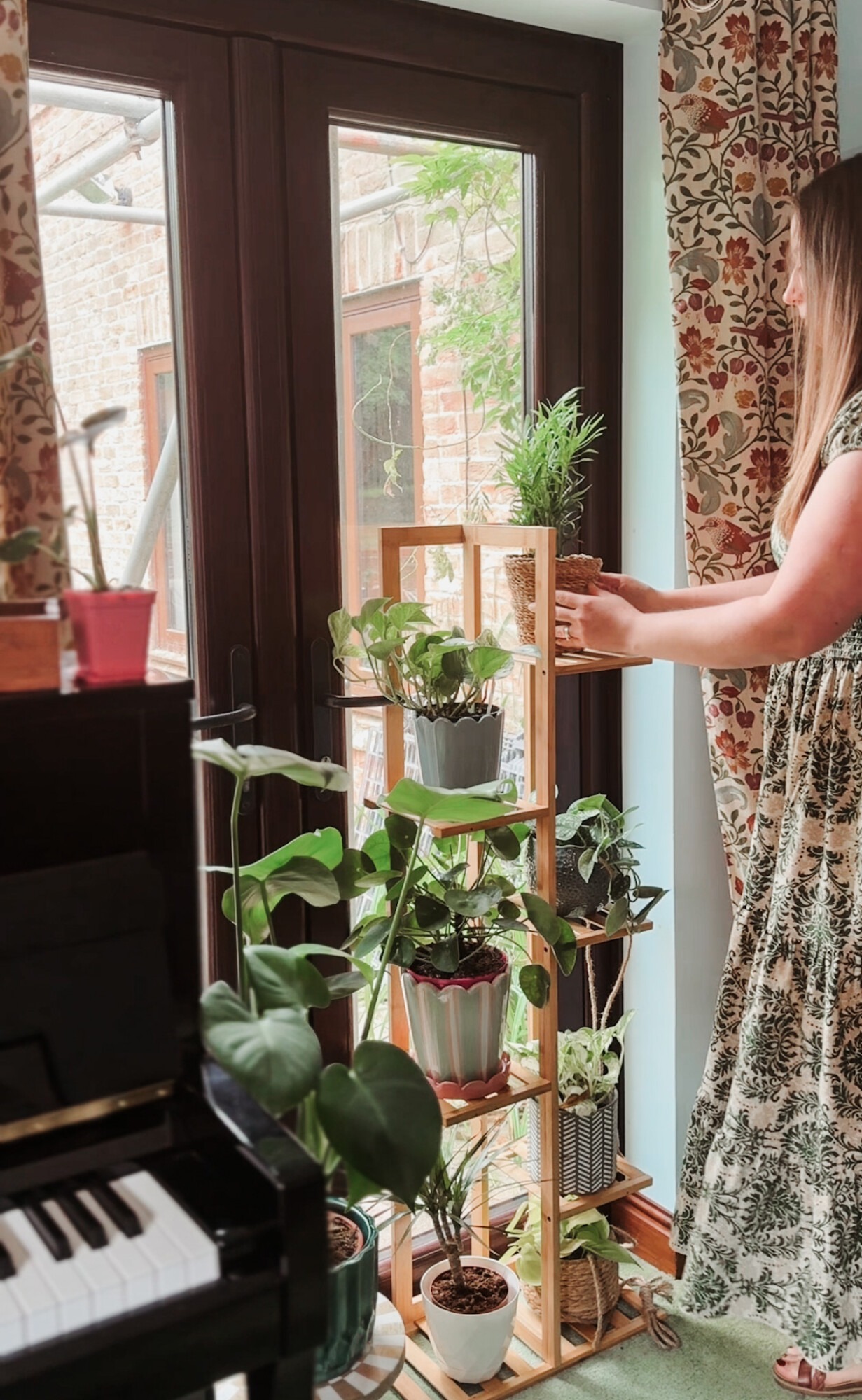
How To Celebrate Houseplant Week 2026
Right, so you’re sold on the idea. How do you actually get involved? Here are some ideas:
Buy Yourself a New Plant
The most obvious one – treat yourself to something new. Visit a local garden centre or houseplant specialist and have a proper browse. Or if you prefer, there are loads of online plant shops now that deliver.
January sales mean you might find some bargains too. I always think it’s worth supporting small local businesses if you can – they often have more interesting varieties than big chains, and the staff actually know their stuff.
If you’re new to plants, start with something easy. Snake plants, pothos, and spider plants are basically indestructible. If you’re more experienced, this might be the perfect time to try something you’ve been eyeing up for ages.
Share Your Plants on Social Media
Get your phone out and take some photos of your plant collection. Houseplant Instagram is massive, and during Houseplant Week UK, everyone shares their favourites.
Use hashtags like #HouseplantWeekUK and #UKHouseplantWeek so other plant enthusiasts can find your posts. It’s actually really nice seeing what everyone else is growing – you get loads of inspiration and ideas.
I’ve discovered so many plants I’d never heard of just from scrolling through plant posts. Fair warning, though: it will make you want to buy more plants. Your collection will grow.
Give a Plant as a Gift
Plants make brilliant presents. If you’ve got a friend or family member who’s been thinking about getting into houseplants, National Houseplant Week is the perfect excuse to buy them something.
Pick something easy to care for if they’re beginners – the last thing you want is for them to kill it immediately and feel rubbish about it. Include a care guide or write down some basic tips.
For people who already have loads of plants, you could get them something a bit more unusual or challenging. Or just buy them a nice pot – you can never have too many plant pots.
Refresh Your Collection
Go through your existing plants and give them some attention. This might mean:
- Repotting anything that’s got too big for its pot
- Trimming off any dead or yellowing leaves
- Giving everything a proper water and feed
- Cleaning the leaves (dusty leaves don’t photosynthesise as well)
- Moving plants to better spots if they’re not thriving where they are
January is actually a good time for this. Most plants are dormant or growing slowly in winter, so they don’t mind being messed about with as much as they would in spring or summer.
Learn Something New
The Royal Horticultural Society run expert-led webinars during Houseplant Week, covering everything from beginner care tips to advanced propagation techniques. If you want exclusive access to proper expertise, these are brilliant.
Even if you don’t fancy formal learning, there are loads of resources online. YouTube is full of plant care videos; there are countless blogs and Instagram accounts dedicated to indoor gardening, and plant groups on Facebook where you can ask questions and get advice.
I’ve learned loads from just watching other people’s videos and reading about their experiences. It’s nice being part of a community of plant lovers.
Attend Events
Check what’s happening locally. Some garden centres and plant shops run special events during Houseplant Week – workshops, talks, plant swaps, that sort of thing.
The RHS often have something on too. They’ve done Houseplant Weekends at places like RHS Garden Rosemoor in previous years, with talks, demonstrations, and loads of plants for sale. Keep an eye on their website for what’s happening in 2026.
Family gatherings with a plant theme are also fun if you’ve got plant-obsessed relatives. Plant swaps are brilliant – everyone brings cuttings or plants they want to rehome, and you all swap. You come away with new varieties without spending any money.
What Plants Should You Get?
If you’re thinking of adding to your collection during UK Houseplant Week 2026, here are some suggestions:
For Beginners:
- Snake plants (Sansevieria) – basically indestructible, need very little water, tolerate low light
- Pothos – trailing plant, grows like mad, very forgiving
- Spider plants – easy to care for, produce babies you can propagate
- Peace lilies – tell you when they need water by dramatically flopping, then perk right back up
For Better Air Quality:
- Spider plants
- Snake plants
- Peace lilies
- Boston ferns (need a bit more care but brilliant for filtering air)
- English ivy
For Drama and Style:
- Fiddle leaf figs (need good light and less water than you’d think)
- Monstera deliciosa (those big split leaves everyone loves)
- String of hearts (gorgeous trailing plant with heart-shaped leaves)
- Anything with dark purples or variegated leaves for visual interest
For Bathrooms:
- Anything that likes humidity – ferns, calatheas, orchids
- Most tropical plants love bathroom conditions
For Kitchens:
- Herbs! Basil, mint, parsley growing on the windowsill
- Small succulents if you’ve got sunny spots
- Pothos on top of cupboards where they can trail down

Common Mistakes (And How to Avoid Them)
Right, some honest advice from someone who’s killed their fair share of plants over the years:
Overwatering – This kills more plants than anything else. Most plants want to dry out a bit between waterings. Stick your finger in the soil – if it’s still damp, leave it. Better to underwater than overwater.
Wrong light – Check what light conditions your plant needs and put it somewhere appropriate. A sun-loving succulent will sulk in a dark corner. A fern will get crispy in direct sunlight.
Ignoring problems – If you spot yellowing leaves, brown tips, or pests, deal with it straight away. These things get worse if you ignore them.
Buying plants you can’t actually care for – Be honest about how much effort you want to put in. Some plants need daily misting, specific temperatures, and constant attention. Others are fine if you water them once a fortnight and otherwise ignore them.
Not researching before you buy – Find out what the plant needs before you take it home. You can usually look it up on your phone in the shop. Check light requirements, watering frequency, whether it’s toxic to pets, etc.
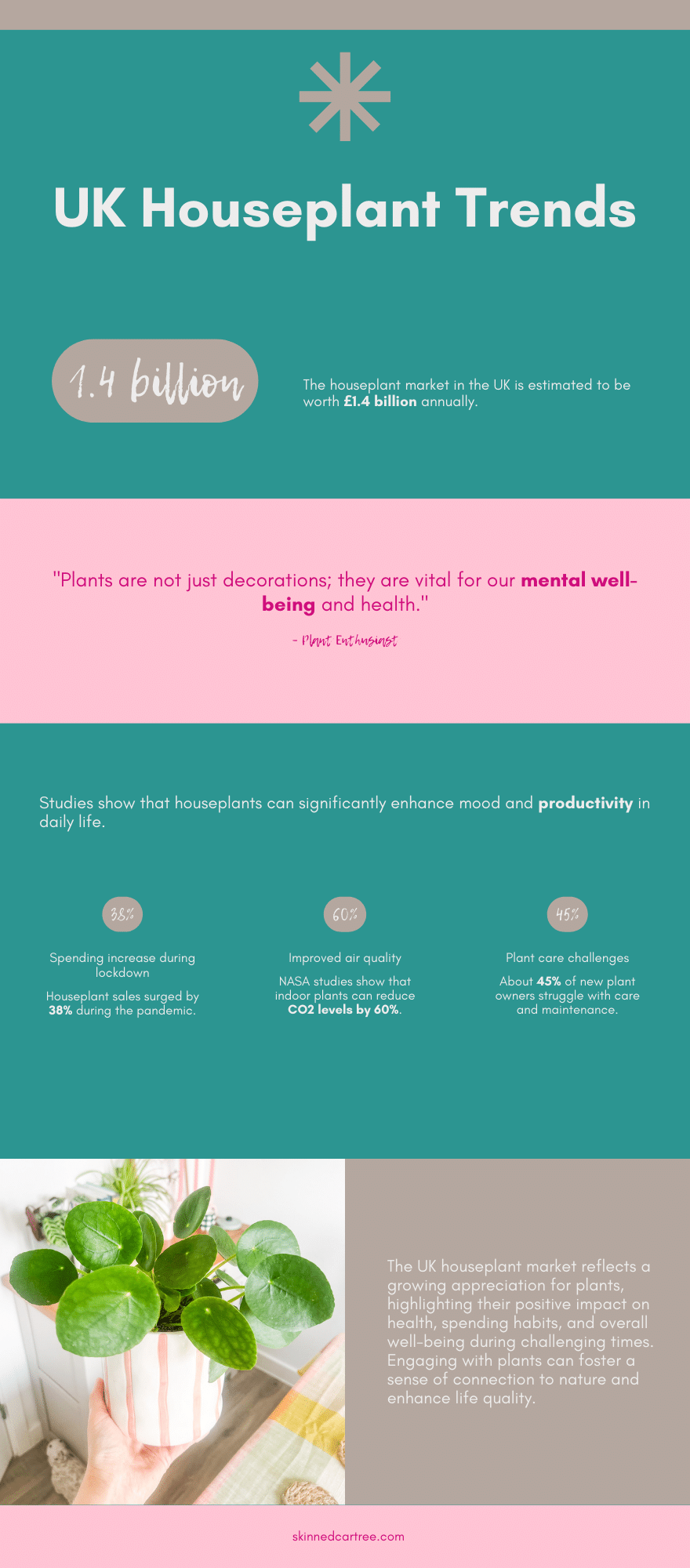
UK Houseplant Statistics:
Sales & Spending:
- The average Brit spends £306.71 per year on houseplants (2021)
- Generation Z spends even more – £414.84 annually on houseplants
- In 2022, Brits spent £6.1 billion on plants
- 46% of Brits purchased a houseplant in 2022
- Houseplant sales in UK garden centres increased by 50% from 2019 to 2021
- Garden centre houseplant sales increased 29.4% in 2021 compared to the previous year
- During COVID lockdown, plant sales in Britain increased by over 30%
- Generation Z has an average of 10 different plants in their home
Mental Health & Wellbeing:
- 42 studies have shown that being around houseplants improves mental and physical health
- 43% of people with houseplants said looking after them improved their wellbeing
- 69% of people said houseplants (real or fake) improve their mood
- Houseplants can improve concentration by up to 20%
- Being around plants can increase memory recall by 15-20%
- 34% of houseplant owners valued them more during lockdown
- Office environments with plants see higher job satisfaction and reduced health complaints
- Houseplants in offices could increase productivity by up to 15%
Air Quality:
- Houseplants can remove up to 87% of air toxins in 24 hours (NASA Clean Air Study)
- Plants can decrease CO2 concentration from 2,000ppm to 480ppm in less than one hour
- CO2 levels above 1,000ppm can cause headaches, fatigue and dizziness
Demographics:
- One in eight UK households don’t have access to any kind of garden
- 55% of all working days lost in the UK during 2021-22 were due to stress, depression and anxiety
- The 25-34 age group accounts for 23% of total consumer spend on houseplants
- 48% of 25-39 year-olds worry about keeping houseplants alive
- Online plant buying increased by 55% in 2021
Popular Plants:
- Orchids are the UK’s most popular houseplant for 2024 (17% of people choose them)
- Succulents and cacti are second at 13.1%, particularly popular with younger age groups
- Pothos, weeping fig and palm were perceived to deliver the greatest sense of wellbeing in studies
Plant Care:
- In 2024, the average person kills roughly 20% of their houseplants (down from 31% in 2020)
- 40% of respondents said they hadn’t killed any houseplants in the past two years
- 19.9% of 25-34-year-olds killed more than half their recent plant purchases
- 26% of buyers are concerned about not knowing how to care for plants
The Bigger Picture: Why Plants Matter
This might sound a bit deep for a post about Houseplant Week, but bear with me.
There’s been loads of talk recently about climate change, sustainability, and how we live our everyday lives. Houseplants are a tiny part of that, but they do matter. They help improve air quality, they connect us with nature even when we’re stuck in cities, and they make us think about living things beyond ourselves.
The Royal Horticultural Society and other organisations use events like Houseplant Week as part of larger campaigns about the benefits of plants and green spaces. It ties into garden design, public health campaigns, and workplace culture changes.
Even companies are getting involved – the marketing efforts around houseplants have grown massively, which shows there’s real impact. More people than ever are interested in indoor gardening, which can only be a good thing.
On a personal level, looking after plants makes you more aware of seasons, growth cycles, and the natural world. Even if you live in a flat in the middle of a city, your houseplants connect you to something bigger.
My Plans for Houseplant Week 2026
I’m definitely going to refresh my collection – I’ve got a few plants that need repotting, and I want to take some cuttings from my pothos to propagate. I’ll probably treat myself to something new too, though I haven’t decided what yet.
I might do a proper photoshoot of my favourite plants to share online. My monstera has got absolutely massive this year and has loads of new leaves, so she’s definitely getting featured.
And I want to finally sort out that awkward corner in the bedroom that never looks quite right. I reckon a tall plant would work perfectly there. Maybe a rubber plant or a fiddle leaf fig.
The thing is, once you start with houseplants, you can’t really stop. There’s always room for one more. My partner rolls his eyes every time I come home with a new one, but even he admits the house looks better with them.
Final Thoughts
UK Houseplant Week 2026 is genuinely worth getting involved with, even if you’re not usually bothered about these awareness weeks. It’s a celebration of something that makes a real difference to our living spaces and our wellbeing.
Whether you’re a complete beginner thinking about getting your first plant, or you’re already a proper plant enthusiast with dozens of them, there’s something for everyone. It’s inclusive, it’s fun, and at the end of it, you’ve got lovely plants to show for it.
So mark your diary for 12th-18th January 2026. Get yourself a new plant, show off the ones you’ve already got, learn something new, or just enjoy having an excuse to appreciate the greenery in your home.
And if anyone questions why you’re buying yet another plant, just tell them it’s for Houseplant Week. It’s basically educational.
Right, I’m off to water my plants. Happy growing!
Related posts: