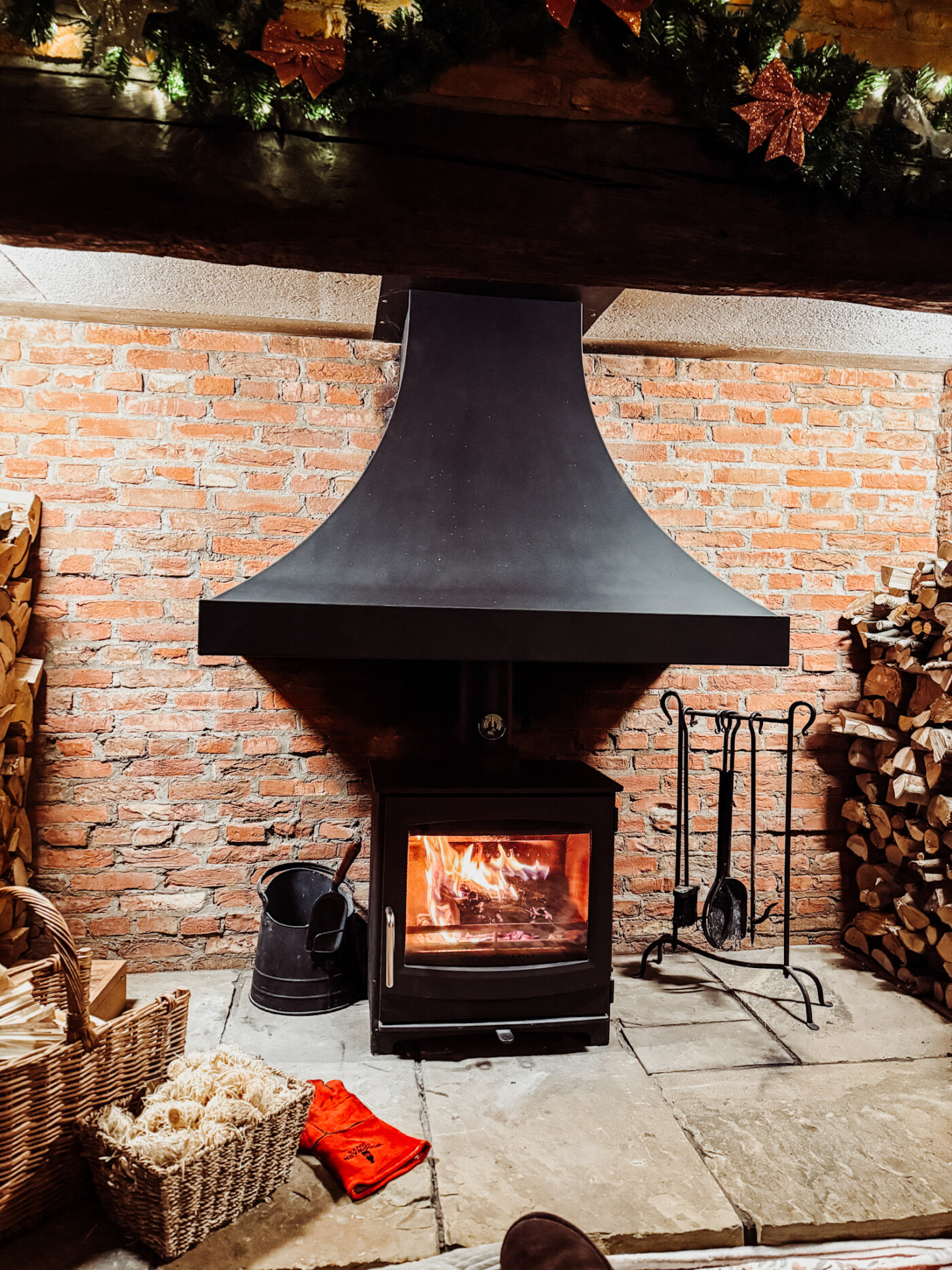
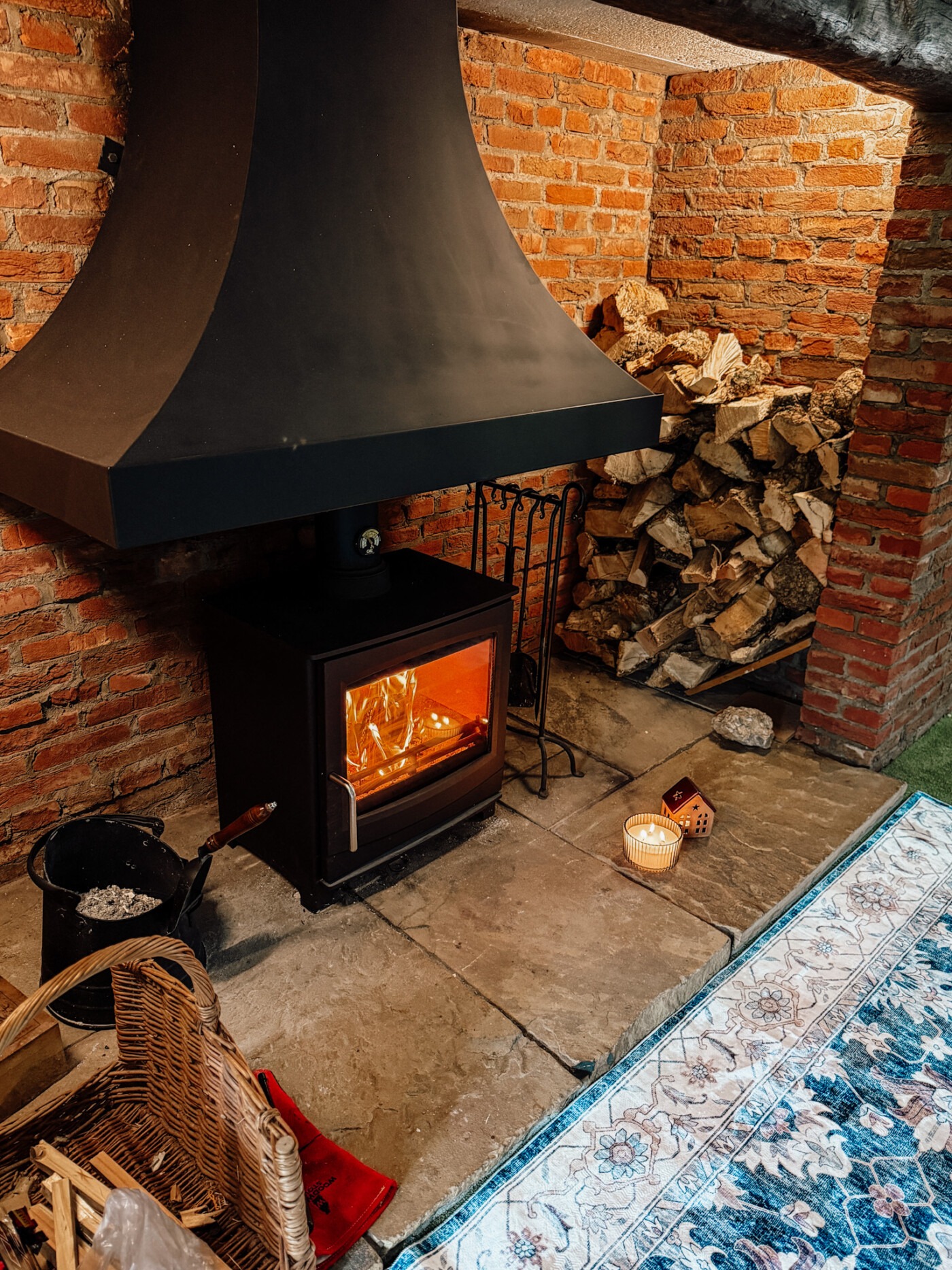
When we moved into our house in December 2024, we had an old open fire in the living room. It looked lovely, but it was draughty, inefficient, and honestly a bit of a pain. So in June, we had a wood burner installed, and it’s genuinely transformed how cosy our living room feels.
But then I started seeing articles and social media posts about how wood burners are bad for your health. Claims about indoor air pollution, lung damage, and even comparisons to cigarette smoke. It proper worried me. Had we just spent thousands of pounds on something that was going to make us all ill?
The question “are wood burners bad for your health” gets searched thousands of times a month, and for good reason. There’s conflicting information out there. So I dug into the actual research on log burner health issues, respiratory risks, and how modern stoves compare to open fires.
So I did what I always do – fell down a research rabbit hole reading studies, health guidelines, and expert opinions. Here’s what I actually found out about whether log burners are bad for your health, and what you can do to use them safely.
- The Short Answer
- Are Multi Fuel Stoves Bad For Your Health Too?
- What Actually Happens When You Burn Wood
- Indoor Air Pollution vs Outdoor Air Pollution
- The Health Risks
- But Aren’t Modern Stoves Better?
- Is an Open Fire Bad For You Compared to a Wood Burner?
- What About Smokeless Fuels and Alternatives?
- How to Use Your Wood Burner Safely
- Are Log Burners Bad For Your Lungs Specifically?
- The Environmental Side
- What The Experts Say
- My Honest Take
- Should You Get a Wood Burner?
- Final Thoughts
- Log Burner Health FAQs
The Short Answer
Yes, wood burners and wood-burning stoves can affect your health if not used properly. But – and this is important – modern stoves used correctly with the right fuel are much safer than old open fires or poorly maintained burners.
The health risks mainly come from tiny particles released when burning wood, which can affect your lungs and heart. But there are proper ways to minimise these risks, which I’ll get into.
Are Multi Fuel Stoves Bad For Your Health Too?
Multi fuel stoves work similarly to wood burners, so yes, they carry similar health risks. Whether you’re burning wood, smokeless coal, or other approved fuels, you’re still creating particulate matter that can affect your lungs and cardiovascular system.
The health impact depends more on how you use the stove rather than whether it’s wood-only or multi fuel. Proper ventilation, clean fuel, and good maintenance matter more than the stove type.
What Actually Happens When You Burn Wood
When you burn wood (or any solid fuels), it releases smoke into the air. That smoke contains fine particles called PM2.5 – particulate matter that’s 2.5 micrometres or smaller. To put that in perspective, they’re about 30 times smaller than a human hair.
These tiny particles are small enough to get deep into your lungs when you breathe them in. They bypass your nose and throat defences and can reach right into your respiratory tissues. The World Health Organization has been warning about high levels of particulate matter for years because of the health impacts.
Wood smoke also contains other nasties:
- Carbon monoxide (the colourless, odourless gas that can be deadly)
- Carbon dioxide (contributes to climate change)
- Polycyclic aromatic hydrocarbons (chemicals that can damage your health)
- Various other gases and particles
The amount of pollution depends on what you’re burning, how you’re burning it, and what type of stove you have.
Indoor Air Pollution vs Outdoor Air Pollution
Right, this is where it gets a bit confusing because wood burners affect both indoor air quality and outdoor air quality, but in different ways.
Indoor Air Pollution
This is the pollution inside your home. Even with modern stoves, some smoke and fine particles escape into your living space rather than going up the chimney. This happens when you:
- Open the door to add more logs
- Don’t have proper ventilation
- Have a poorly maintained stove or flue
- Use wet wood that creates more smoke
The indoor air pollution from wood burners can be significant. Studies have found that homes with wood burners often have higher levels of fine particulate matter indoors than homes with central heating or heat pumps.
Professor Ane Johannessen did research showing that indoor air pollution from solid fuel heating has similar effects on lung function measurements as cigarette smoke. That’s quite sobering when you think about it.
Outdoor Air Pollution
Wood burners also contribute to outdoor air pollution in your local area. All that smoke going up your chimney doesn’t just disappear – it spreads around your neighbourhood, affecting air quality for everyone nearby.
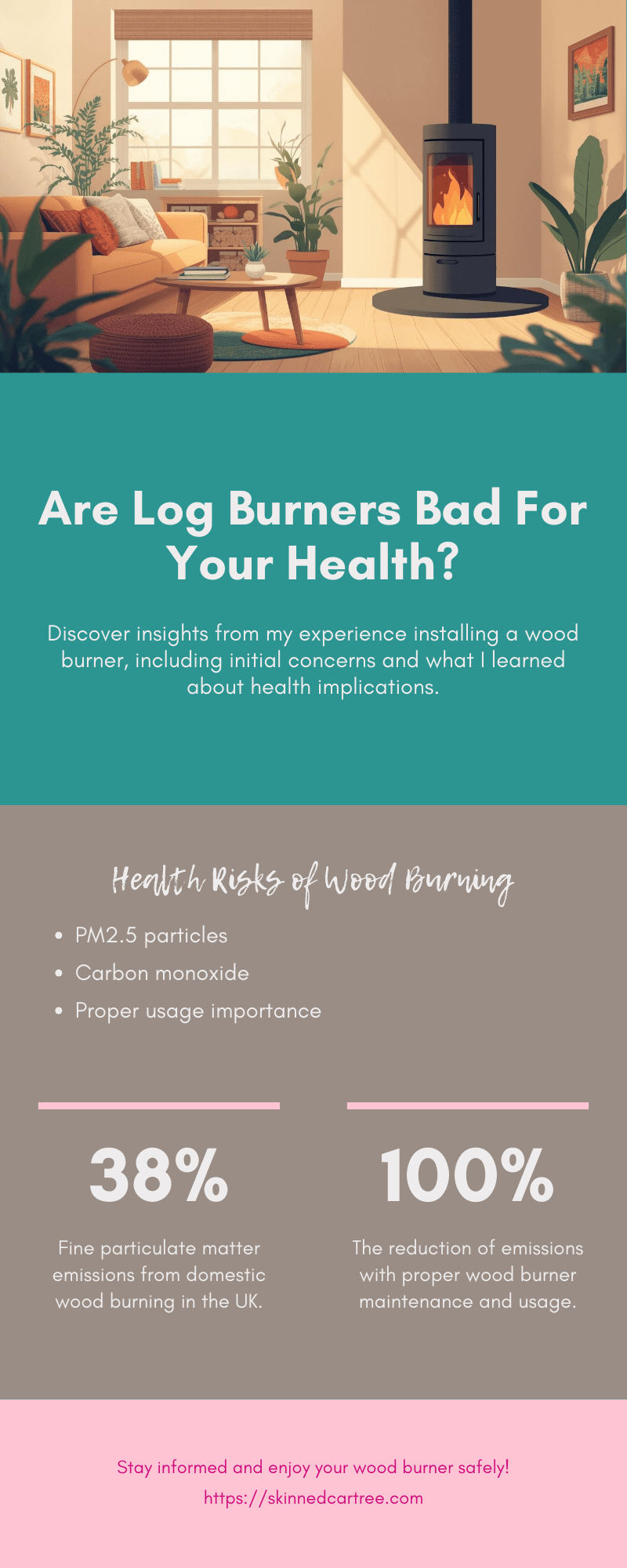
According to the Expert Group on Air Pollution, domestic wood burning now accounts for about 38% of fine particulate matter emissions in the UK. That’s more than comes from all road traffic combined. In urban areas and residential areas with a high concentration of wood stoves, this becomes a real problem for people’s health.
In wealthier parts of London particularly, there’s been a growing trend of installing wood burners, which has led to higher rates of respiratory issues in those areas. The irony is that people are installing them for that cosy aesthetic whilst inadvertently making the air quality worse for their neighbours.
Local authorities have introduced smoke control areas in many places to try to manage this, where you can only burn smokeless fuels or use approved stoves.
The Health Risks
So what can all this pollution actually do to your health? The research is pretty clear that there are genuine risks, especially with long-term exposure.
Respiratory Problems
Breathing in wood smoke and fine particles affects your respiratory system. The tiny particles irritate your airways and can cause:
- Coughing and wheezing
- Flare-ups if you have asthma or other lung conditions
- Chronic obstructive pulmonary disease (COPD) with long-term exposure
- Respiratory decline over time
- Increased risk of lung disease
The European Respiratory Society Congress has presented research showing that solid fuel heating leads to worse health outcomes. Even short-term exposure to high levels of wood smoke can trigger symptoms in people with existing respiratory issues.
Heart and Cardiovascular Problems
It’s not just your lungs. Fine particulate matter can get into your bloodstream and affect your heart. Studies have found links between wood smoke exposure and:
- Heart disease
- Increased risk of heart attacks
- Cardiovascular problems generally
Research looking at an eight-year period found that people using solid fuel heating had higher rates of both respiratory and cardiovascular issues compared to those using cleaner heating methods.
Cancer Risks
Long-term exposure to wood smoke has been linked to lung cancer. The polycyclic aromatic hydrocarbons in wood smoke are known carcinogens. It’s not at the same level of risk as smoking cigarettes, but it’s still a genuine concern with regular exposure over many years.
Who’s Most at Risk?
Some people are more vulnerable to the health effects of wood smoke:
- Older adults and older people – their respiratory systems are more sensitive
- Young children – their lungs are still developing
- People with existing lung conditions like asthma or COPD
- Anyone with heart disease
- Pregnant women
Dr Horsfall, an environmental health researcher, has highlighted that the health impacts can be severe for vulnerable groups, potentially leading to premature deaths in extreme cases.
But Aren’t Modern Stoves Better?
Yes, absolutely. Newer stoves are significantly better than old open fires or traditional wood burning methods.
Modern stoves that meet current ecodesign regulations are designed to:
- Burn more efficiently
- Produce less smoke
- Release fewer fine particles
- Use less fuel to generate the same heat
An ecodesign stove can be up to 80% more efficient than an open fire, and produces far less harmful air pollution. We replaced our open fire with a modern wood burner specifically because it’s much cleaner and more efficient.
But – and this is crucial – even new stoves still create some indoor air pollution and release fine particles. They’re better, not perfect. Recent studies in recent years have shown that whilst modern stoves are an improvement, they still contribute to both indoor and outdoor pollution levels.
Is an Open Fire Bad For You Compared to a Wood Burner?
Absolutely, yes. Open fires are significantly worse for your health than modern wood burners. We replaced our open fire specifically because of this.
Open fires are only about 20% efficient, which means 80% of the heat goes straight up the chimney along with loads of smoke and particles. They also create more indoor air pollution because they’re not sealed units – smoke can billow back into your room, especially when the wind changes.
Modern wood burners are enclosed, burn at higher temperatures (which means cleaner combustion), and have been designed to minimise emissions. An ecodesign stove produces up to 90% less particulate matter than an open fire.
So if you’re choosing between an open fire and a wood burner, the wood burner is definitely the healthier option. But ideally, neither is as safe as central heating or a heat pump from a pure health perspective.
What About Smokeless Fuels and Alternatives?
The type of fuel you burn makes a massive difference.
Wet Wood vs Dry Wood
This is probably the most important thing. Burning wet wood (wood with high moisture content) creates way more smoke and releases more harmful particles than burning dry wood.
Wet wood doesn’t burn properly – it smoulders rather than burns cleanly. You get loads of smoke, less heat, and more pollution. It’s also illegal to sell wet wood for burning in the UK now.
Properly seasoned wood (dried for at least 2 years) or kiln-dried wood burns much cleaner. The moisture content should be below 20%. This produces less smoke and fewer harmful emissions.
Wood Briquettes
Wood briquettes are compressed sawdust that burns very cleanly and efficiently. They’re a good option if you want to reduce emissions.
Smokeless Coal
In smoke control areas, you might need to use smokeless coal instead of wood. It produces less visible smoke, though it still releases fine particles.
Heat Pumps and Central Heating
If we’re talking about the healthiest options for home heating, heat pumps and modern central heating systems don’t produce any indoor air pollution at all. They run on electricity rather than burning stuff, so there’s no smoke or particles released into your home.
They’re much better for both indoor air quality and outdoor air quality. They also don’t contribute to climate change in the same way as burning fossil fuels or wood does (assuming your electricity comes from renewable sources).
The downside? They’re expensive to install, and not everyone can have them depending on their house type. Plus, there’s something about a real fire that central heating just can’t replicate.

How to Use Your Wood Burner Safely
If you’ve got a wood burner (like me) or you’re planning to get one, here’s how to minimise the potential health risks:
1. Only Burn Dry, Seasoned Wood
Cannot stress this enough. Use properly dried wood with low moisture content. It should have been seasoned for at least 2 years, or buy kiln-dried logs. This single change makes the biggest difference to how much smoke and pollution your stove produces.
2. Get Your Stove and Chimney Properly Installed
Use a professional installer who knows what they’re doing. Proper installation ensures smoke goes up the chimney rather than into your room.
3. Maintain Your Stove Regularly
- Get your chimney swept at least once a year (twice if you use it a lot)
- Check for cracks or damage
- Clean out ash regularly
- Make sure the door seals properly
Poor maintenance means more smoke escaping into your home, which means more indoor air pollution affecting your family’s health.
4. Ventilate Your Home
This is crucial. Open windows when you’re using the stove, even if it seems counterintuitive when you’re trying to keep warm. Fresh air circulation helps dilute any pollutants and improves indoor air quality.
We usually crack open a window in another room when we’ve got the wood burner going. It creates a gentle air flow that helps clear any smoke or particles. We also have air vents built into our fireplace that go under our house outside, and we open them when the fire is on.
5. Use an Air Purifier
If you’re particularly concerned about indoor air quality, consider getting an air purifier with a HEPA filter. These can capture fine particles and improve the air quality in your home.
We got one for the living room after installing the wood burner, and it does seem to help, especially when we first light the fire, and there’s a bit more smoke.
6. Light It Properly
How you light your fire makes a difference. Use proper firelighters and kindling, and get a good hot fire going quickly rather than letting it smoulder. A hot fire burns cleaner.
7. Don’t Overfill It
Adding too much wood at once can cause incomplete combustion, which creates more smoke. Add logs gradually rather than cramming loads in at once.
8. Consider When You Use It
If you live in a built-up area with a high concentration of wood stoves, maybe save your burner for really cold days rather than using it every evening. This helps reduce the cumulative effect on local air quality.
Are Log Burners Bad For Your Lungs Specifically?
Yes, log burners can affect your lung health. The fine particles (PM2.5) from wood smoke are small enough to get deep into your lung tissue. Over time, exposure can lead to:
- Reduced lung function
- Increased asthma symptoms
- Higher risk of respiratory infections
- Long-term lung damage with repeated exposure
This is especially true if you have existing lung conditions. The research comparing solid fuel smoke to cigarette smoke shows that the particulate matter affects lung function in similar ways, even if the overall risk isn’t identical.
That said, modern stoves with proper use create far less indoor pollution than old open fires. So whilst yes, log burners can be bad for your lungs, using them correctly significantly reduces the risk.
The Environmental Side
Beyond human health, there’s also the environmental aspect to consider. Burning wood releases carbon dioxide, contributing to climate change. Yes, wood is technically renewable (unlike fossil fuels), and trees absorb CO2 as they grow. But that doesn’t make it carbon neutral when you consider the full picture.
There’s been debate about whether wood burning should be considered a potential environmental risk factor alongside other forms of pollution. The Expert Group has called for clearer public health guidance on this.
In parts of the world with strict environmental regulations, some high-income countries are moving away from solid fuel users entirely, promoting heat pumps and other cleaner technologies instead.
What The Experts Say
Research from the European Respiratory Society Congress has shown clear links between solid fuel heating and respiratory problems. The true effects of solid fuel exposure are still being studied, but what we know so far suggests genuine health concerns.
Dr Horsfall and other environmental health experts argue that we need a healthier baseline for the exposed group – essentially, people using wood burners need better guidance on how to do it safely, and potentially stricter regulations on emissions.
Professor Ane Johannessen’s research comparing solid fuel smoke to cigarette smoke has been particularly eye-opening. It doesn’t mean wood burners are as dangerous as smoking cigarettes, but it shows the similar way that particulate matter affects your lungs.
My Honest Take
Look, I’ve got a wood burner. We use it. On cold winter evenings, there’s genuinely nothing like sitting by a real fire. It makes the house feel cosy in a way that radiators just don’t. We also live in the middle of nowhere, so it’s important that we have two ways to hear our house in case one fails during bad weather – it’s not uncommon for my village to get snowed in as we’re up high and in a valley.
But I’m not going to pretend there aren’t health risks. The research is pretty detailed that wood smoke can affect your respiratory and cardiovascular health, especially with long-term exposure.
What I’ve tried to do is use it as safely as possible:
- We only burn kiln-dried wood
- We got the installation done properly by certified installers
- We open windows for ventilation
- We got air vents that are open when the fire is on
- We get the chimney swept regularly
- We don’t use it every single day – just when it’s properly cold or when we fancy it
Is this perfect? No. Would a heat pump be better for our health and the environment? Probably, yes. But we made the decision that for us, the benefits of having a wood burner (the cosiness, the aesthetics, the backup heat source if our boiler packs in) outweigh the risks, as long as we’re sensible about it.

Should You Get a Wood Burner?
That’s ultimately your decision. If you’re thinking about it, consider:
Reasons to get one:
- Much more efficient than an open fire
- Can reduce heating bills (though wood isn’t cheap anymore)
- Looks lovely and feels cosy
- Backup heat source
- Modern stoves are significantly cleaner than old ones
Reasons to think twice:
- Health impacts from indoor air pollution
- Contributes to outdoor air pollution
- Requires proper maintenance
- Restrictions in smoke control areas
- Environmental concerns
- Initial cost and installation
Probably don’t get one if:
- Anyone in your household has respiratory problems
- You’re in a very built-up area with lots of other wood burners nearby
- You can’t commit to using it properly with dry wood and good ventilation
- You’re pregnant or have young children (the health risks are higher)
Final Thoughts
Are log burners bad for your health? They can be, yes. But with modern stoves, proper fuel, good maintenance, and sensible usage, you can significantly reduce the risks.
The key thing is being informed about the potential health risks and taking steps to minimise them. Don’t just stick logs in and pretend there’s no issue. Understand what you’re doing and do it properly.
And honestly? If you’re getting one mainly for aesthetics and you’ve got other heating options, maybe think twice. But if you’re replacing an old open fire as we did, or you’re using it as your main heat source and being sensible about it, then modern stoves are a reasonable option.
Just don’t kid yourself that it’s completely harmless. Nothing that involves burning stuff and creating smoke is totally safe. But with the right precautions, you can enjoy your wood burner whilst keeping the health impacts as low as possible.
Stay warm, but stay informed!
Have you got a wood burner? How do you use it safely? I’d love to hear what others do to minimise the risks.
Log Burner Health FAQs
Are wood burners bad for your health?
Wood burners can affect your health if used improperly. They release fine particulate matter (PM2.5) that can reach deep into your lungs. However, modern ecodesign stoves used correctly with dry wood, proper ventilation, and regular maintenance are significantly safer than old open fires.
Are log burners safe indoors?
Yes, when properly installed and maintained. Modern log burners with correct ventilation, regular chimney sweeping, and burning only dry seasoned wood are safe for indoor use. The key is minimising smoke escape into your living space.
Are open fires bad for your health?
Yes, open fires are worse for health than modern wood burners. They’re only 20-30% efficient (vs 80%+ for modern stoves), produce more smoke, release more particulate matter, and allow more pollution into your home. Replacing an open fire with a modern stove significantly reduces health risks.
What are the symptoms of wood smoke inhalation?
Short-term symptoms include coughing, wheezing, eye irritation, and breathing difficulties. Long-term exposure can cause respiratory decline, COPD, cardiovascular problems, and increased lung cancer risk. People with asthma or existing lung conditions are most vulnerable.
How do I use my wood burner safely?
Burn only dry seasoned wood (under 20% moisture), ensure proper ventilation by opening windows, get your chimney swept annually, maintain your stove regularly, use an air purifier, and don’t overfill the stove. Light fires properly to get a hot, clean burn quickly.
Are wood burners being banned in the UK?
No, wood burners aren’t banned in the UK. However, selling wet wood is illegal, and smoke control areas restrict what you can burn. Only ecodesign-compliant stoves can be sold new. The government encourages cleaner heating methods but hasn’t banned wood burners.
Related posts: