Right, this is the question everyone with a wood burner (or thinking about getting one) wants to know: are log burners actually cheaper than central heating? With energy bills going mental and fuel prices constantly rising, working out the most economical option for heating your home isn’t straightforward.
We had our wood burner installed in June 2024, and I’ve been keeping an eye on how much we’re spending compared to just using our gas boiler. So I’ve done the maths, looked at the numbers, and I’m going to give you an honest breakdown of the costs involved.
The short answer? It depends. I know, annoying. But the central heating debate isn’t as simple as “wood burners are always cheaper” or “central heating is better value.” There are loads of key factors that affect the actual cost, and your personal situation makes a massive difference.
- The Running Costs: What You Actually Pay
- Installation Costs: The Upfront Investment
- Maintenance Costs: The Ongoing Expenses
- The Real Question: Which Actually Saves You Money?
- What About Environmental Impact?
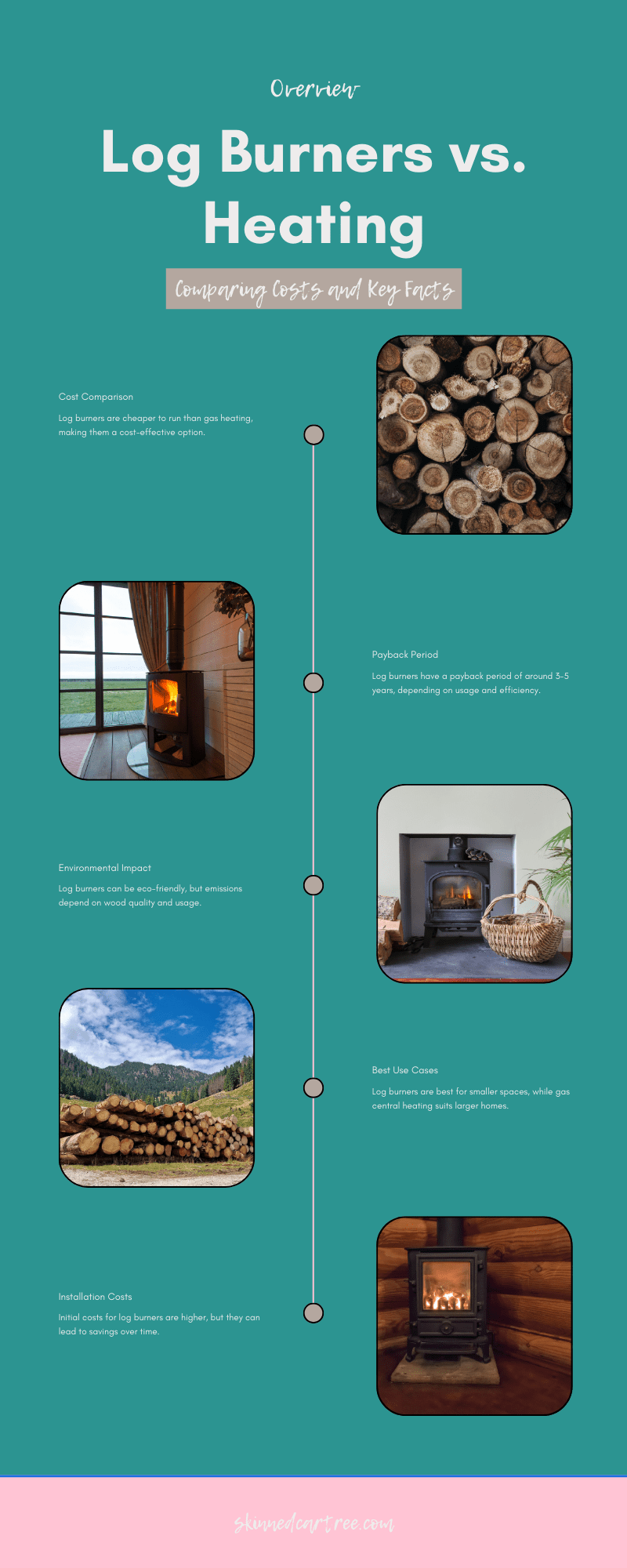
- The Payback Period
- What We’ve Found With Ours
- Alternative Ways to Save on Heating
- So, Are Log Burners Cheaper?
- Final Thoughts

The Running Costs: What You Actually Pay
Let me start with the first thing everyone wants to know – what does it actually cost per kilowatt hour to run each heating method?
| Heating Method | Average Cost per kWh (2025) | Notes |
|---|---|---|
| Wood Log Burner | 10p – 14p | Based on the Ofgem price cap projected for 2025. Average home gas costs, but prices can rise if global markets shift. New condensing boilers offer better efficiency, squeezing more heat from each unit. |
| Central Heating (Gas Boiler) | 12p – 15p | Depends on local log prices and moisture content. Well-seasoned wood burns cheaper. Sourced logs from your own garden or local woods can save more. |
| Central Heating (Electric) | 28p – 32p | Depends on local log prices and moisture content.Well-seasoned wood burns cheaper. Sourced logs from your own garden or local woods can save more. |
| Central Heating (Oil) | 9p – 13p | Prices fluctuate with global crude rates. Rural homes often use oil tanks. Cost-effective only if bulk buying is possible. |
Wood Log Burner Costs
In 2025, burning wood in a log burner costs roughly 10-14p per kWh. That sounds quite good, right? But the average cost depends heavily on:
- Where you get your wood from – If you’ve got free wood from your own trees or a mate’s woodland, brilliant. You’re laughing. If you’re buying kiln-dried logs from a supplier, you’re looking at about £80-120 per cubic metre.
- Moisture content – Properly seasoned wood (dried for 2+ years) or kiln-dried wood burns much more efficiently than wet wood. Wet wood is mostly illegal to sell now anyway, but it’s worth noting because efficiency directly affects your fuel costs.
- How efficient your stove is – Modern stoves, especially modern ecodesign stoves, can reach 80% efficiency. Older wood-burning stoves might only hit 60%.
The Stove Industry Alliance reckons that if you’re using your log burner as your main heat source in one or two rooms, you can save quite a bit compared to heating those rooms with central heating. But if you’re trying to heat your entire home with just a wood stove, you’ll need multiple stoves or supplementary heating.
Gas Boiler Central Heating
Gas heating systems cost about 12-15p per kWh based on the energy price cap for 2025. This is projected to stay fairly stable (though who knows with energy bills these days).
Gas boilers can be over 90% efficient if they’re modern condensing models. That’s actually better efficiency than most log burners. But natural gas prices have been creeping up over the last year, and they’re not likely to drop significantly because of lower carbon emissions targets and the global action plan to move away from fossil fuels.
The big advantage of central heating is it heats your entire home and provides hot water. You’re not just warming one room – you’ve got radiators everywhere, constant heat, and a thermostat that means you’re not constantly fiddling with it.
Electric Central Heating
Electric central heating systems are the most expensive at 28-32p per kWh. Unless you’re on a special tariff or using air source heat pumps, electric heating is brutal on your energy bills.
Electric fireplaces and electric heaters basically turn your electricity meter into a slot machine. Even with domestic energy prices theoretically being more stable than gas, electricity is still significantly more per kilowatt hour.
Oil Heating
Oil heating sits at about 9-13p per kWh, which makes it potentially the cheapest option per unit of energy. But oil prices fluctuate massively with import costs and global markets, so what’s cheap this year might be expensive next year.
Plus, you need storage space for a big oil tank, and you’re committed to buying in bulk. Not everyone has the option or the space for this.
Installation Costs: The Upfront Investment
This is where things get expensive, and it’s a key factor in whether log burners are actually a cheaper alternative overall.
| Expense Type | Log Burner | Central Heating (Gas Boiler) |
|---|---|---|
| Typical Installation Cost (2025) | £1,300 – £3,000 (standard stove and fitting, flue/chimney work extra) | £2,500 – £4,500 (boiler, radiators, pipework, and controls included) |
| Chimney/Flue Costs | £400 – £2,500 (lining or new twin wall flue needed in most homes) | N/A |
| Annual Servicing | £70 – £120 (chimney sweep and safety check) | £80 – £150 (boiler service by Gas Safe engineer) |
| Typical Repairs | £30 – £200 (door seals, firebricks, glass, minor parts) | £100 – £500 (valves, pumps, circuit boards, thermostat) |
| Permit/Compliance Fees | £150 – £300 (if HETAS certificate or local authority notice needed) | £75 – £200 (Gas Safe notification or Building Control sign-off) |
| Lifespan (Average) | 10 – 20 years (with regular care) | 10 – 15 years (well maintained) |
| DIY Potential | Low (professional fitting and safety checks required) | Very low (must use Gas Safe engineer) |
Log Burner Installation
A new wood burner will cost you:
- Stove itself: £500-2,000 depending on size and quality
- Installation: £800-1,500 by a HETAS-certified installer
- Flue/chimney work: £400-2,500 if you need a new flue liner or chimney work
- Building work: Potentially more if you need a hearth built or structural changes
Total installation costs: £1,300-3,000 minimum, potentially up to £6,000+ if you’re starting from scratch with no existing fireplace.
We were lucky – we already had a chimney from our old open fire, so we saved on that. But even so, the installation wasn’t cheap.
Central Heating Installation
If you’re installing a new gas boiler and full central heating system from scratch:
- Boiler: £1,500-2,500
- Radiators and pipework: £1,000-2,500
- Installation by Gas Safe engineer: £1,000-2,000
Total: £2,500-4,500 for a complete system. But most people already have central heating and are just replacing an old boiler, which is cheaper (£2,000-3,500 typically).
So upfront costs are roughly similar, though log burners can be slightly cheaper if you’ve already got a suitable chimney. But if you haven’t, the additional costs of creating a proper flue system can make it more expensive.
Maintenance Costs: The Ongoing Expenses
Log Burner Maintenance
- Annual chimney sweep: £70-120
- Door seals, firebricks, glass replacement: £30-200 as needed
- HETAS certificate/compliance: £150-300 if needed
You also need to factor in:
- Storage space for logs (they need to be kept dry)
- Time and effort sourcing and stacking wood
- Regular cleaning of ash and glass
A log fire creates ash that needs emptying regularly. It’s not difficult, but it’s another job to do.
Central Heating Maintenance
- Annual boiler service: £80-150 by a Gas Safe engineer
- Repairs: £100-500 for valves, pumps, thermostats, etc.
Gas boilers are generally more reliable and need less day-to-day maintenance. You don’t need to load fuel, clean ash, or worry about having enough wood to keep warm.
The Real Question: Which Actually Saves You Money?
Right, let’s be honest about this. Whether a log burner is cheaper depends entirely on your situation.
When Log Burners ARE Cheaper
You’ll save money with a wood burner if:
- You have access to free wood or very cheap wood fuel (your own trees, a friend’s woodland, local free sources)
- You’re only heating one or two rooms as your primary heat source
- You were previously using electric heating in those rooms
- You’re happy to use it as supplementary heating alongside central heating
- You’ve already got a suitable chimney (no huge installation costs)
- You’re at home a lot and can tend the fire
- You live in rural areas where wood is more easily available
In this scenario, especially if you’re getting cheap or free wood, you can absolutely save money. The Energy Saving Trust suggests you could save £200-400 a year on heating bills if you’re replacing electric heating in main living spaces.
When Central Heating IS Cheaper
Central heating will be more economical if:
- You need to heat your entire home regularly
- You want hot water as well as heating
- You’re out at work all day and need automated heating on a timer
- You have no access to cheap wood (buying kiln-dried logs at retail prices gets expensive)
- You have no storage space for logs
- You live in urban areas where sourcing and storing wood is impractical
- You’re in a smoke control area with strict regulations
For the average household heating a whole home, gas central heating is generally still the more cost-effective way. Yes, the cost of gas has gone up, but so have firewood costs, and the convenience factor of central heating is massive.
What About Environmental Impact?
This deserves mentioning because it affects the bigger picture beyond just your energy costs.
Log Burners and the Environment
Wood is technically a renewable energy source – trees grow back. But burning wood does create:
- Particulate matter that contributes to air pollution (especially in urban areas)
- Carbon emissions (though less than fossil fuels)
- Impact on urban health in densely populated areas
The particulate matter issue is real. Even modern ecodesign stoves release tiny particles that affect air quality and people’s health. In urban health terms, this is a growing concern.
However, if you’re burning sustainably sourced kiln-dried wood or wood pellets efficiently, your carbon footprint is lower than burning oil or gas.
Central Heating and the Environment
Gas boilers burn natural gas (a fossil fuel), which contributes to carbon emissions and climate change. The environmental benefits of moving away from gas heating are part of why there’s pressure to switch to heat pumps and alternative sources of heat.
Air source heat pumps are the sustainable heat source everyone’s being encouraged toward, but they’re expensive to install (£7,000-13,000) even with government grants.
The Payback Period
If you’re installing a new wood burner, how long before you actually break even on the installation costs?
If you’re saving £300 a year on heating bills (realistic if you’re replacing electric heating), it’ll take about 4-6 years to recover the installation costs. If you’re only saving £100-200 a year (more likely if you’re supplementing gas central heating), you’re looking at 8-15 years.
Wood burners last 10-20 years with proper maintenance, so you will eventually see financial benefits. But it’s not an instant money saver.
What We’ve Found With Ours
We’ve had our log burner since June, so we’ve been through one full winter with it now. Here’s what I’ve actually found:
The Good:
- We’re definitely using less gas heating in the living room
- It’s lovely and cosy, makes the room feel warm in a way radiators don’t
- Gives peace of mind having a backup heat source if the boiler breaks
- The kids love sitting by the real fire
- We’ve been able to get free wood from our garden and local area, but we have to dry and cut it ourselves
The Reality:
- We still need central heating for the rest of the house and for hot water
- It’s more faff than turning on the thermostat
- You can’t just leave the house – you need to be there to keep it going
Our heating bills have gone down a bit, but not massively. We’re probably saving about £30-40 a month on LPG gas. But the cosiness factor and having that real fire makes it worth it for us.
If we had to buy wood, it would be a completely different calculation. We’d not be saving then.
Alternative Ways to Save on Heating
If you’re trying to reduce your energy costs, there are other cost-effective alternatives to consider:
- Better insulation – Boring but effective. Costs less than a log burner and saves more money
- Smart thermostats – Helps manage gas heating more efficiently
- Draught-proofing – Cheap and stops heat escaping
- Zone heating – Only heat rooms you’re using
- Underfloor heating (if installing new) – More efficient than radiators
These sustainable ways to save energy might not be as exciting as a lovely log fire, but they’re genuinely effective.
So, Are Log Burners Cheaper?
The honest answer: For most people, no, log burners aren’t significantly cheaper than central heating when you factor in all costs.
BUT – they can be cheaper if you:
- Have access to cheap or free wood
- Only need to heat specific rooms
- Currently use expensive electric heating
- Already have a suitable chimney
For everyone else, log burners are more about lifestyle and aesthetics than saving money. They create a gorgeous atmosphere, they’re cosy, they give you energy independence, but they’re not necessarily going to slash your heating bills unless your circumstances are perfect for it.
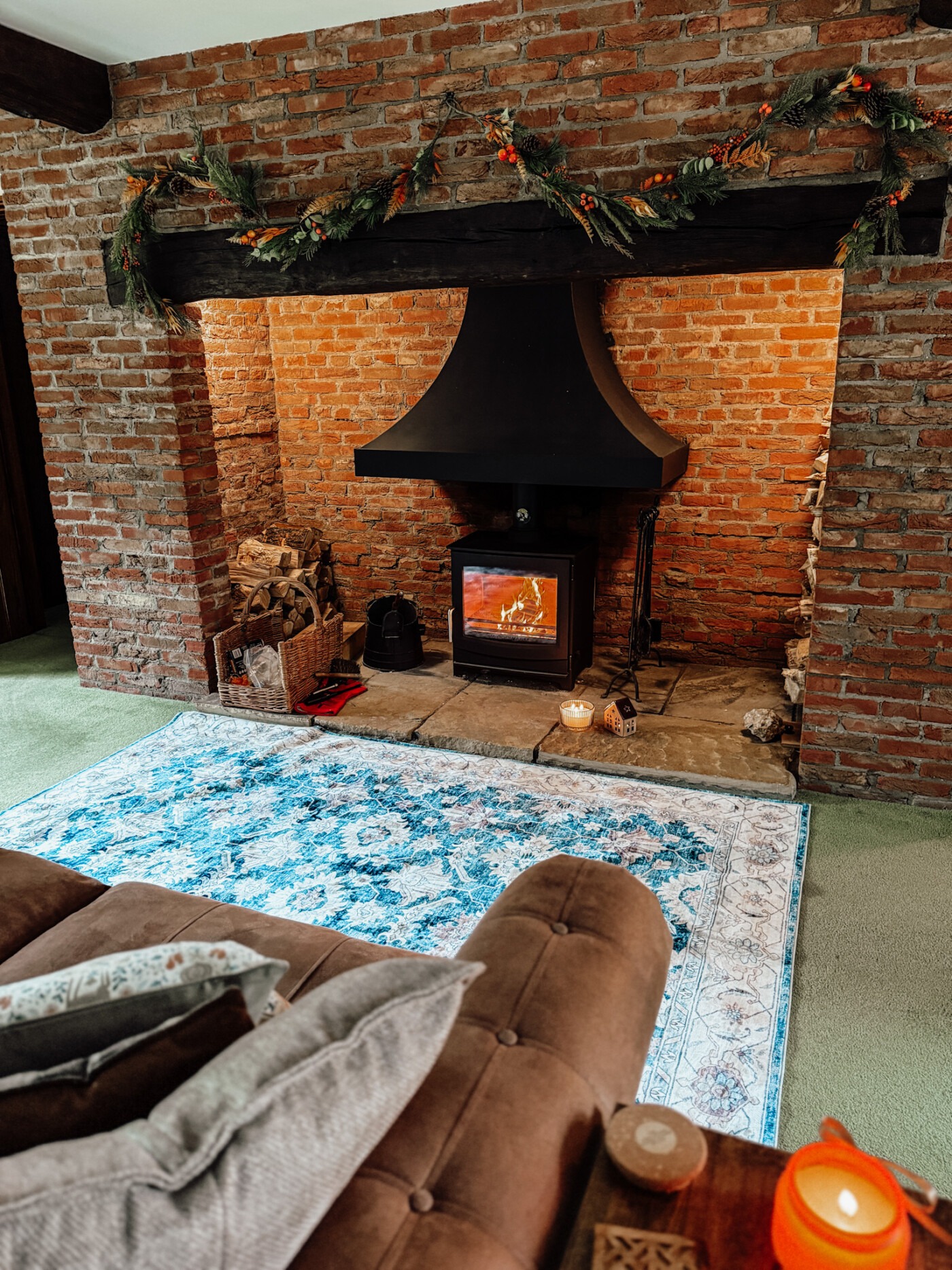
I don’t regret getting ours at all. I love it. But I went into it knowing it wasn’t primarily a money-saving exercise – it was about having that cosy fire and a backup heat source. The fact we’re roughly breaking even on costs (or spending slightly more) is fine because we’re getting the benefits we wanted.
Final Thoughts
Whether log burners are cheaper than central heating depends on so many factors that there’s no universal answer. You need to honestly assess:
- Your fuel type and where you’ll source wood
- Your existing heating setup
- What you actually need to heat
- Whether you’re home enough to tend a fire
- Your budget for installation costs and annual costs
- How much time you’re willing to spend on maintenance and regular cleaning
For the average household in the UK in 2025, gas central heating is probably still the more economical option for whole-home heating. But for supplementary heating in main living spaces, especially if you can source wood cheaply, a wood burner can save money.
Just don’t expect miracles. Do the maths for your specific situation before committing thousands to installation. And if you do get one, enjoy the cosy evenings by the fire – they’re worth more than the financial benefits anyway.
Got a log burner? How do your costs compare to central heating? I’d love to hear whether you’re actually saving money or if, like me, you’re doing it more for the vibe than the savings!
Related posts: