Japan’s cities don’t separate themselves into categories very easily. What feels busy is often close to what feels quiet. What looks improvised tends to follow rules you only notice after a while. Street food alleys and small shrines appear side by side, not as contrasts, but as parallel habits folded into daily movement.
Nothing announces the shift between them. You simply adjust. One moment you’re standing, eating quickly, aware of bodies passing behind you. The next, you’re slowing without deciding to, stepping onto gravel, lowering your voice even if no one has asked you to.
Food That Appears Where Space Allows
Street food in Japan does not claim territory. It appears where there is room for it — an opening between buildings, a stretch of pavement that can be borrowed for a few hours. The sound usually arrives first. Oil. Voices. The scrape of metal.
Eating happens without ceremony. People stand close. Decisions are quick. You don’t sit down expecting to stay. You stop just long enough, then you move again.
This ordinariness is often what people notice most on best Japan tours — not the novelty of flavours, but how easily food slips into the rhythm of the street.
Short Stops, Then Movement Again
What’s striking is how little eating interrupts the city. There’s no lingering expectation. No sense that you should slow everything down.
You eat. You step aside. The space opens again. Someone else takes your place. The alley continues as if nothing happened.
These brief pauses don’t feel rushed or relaxed. They feel calibrated.
Shrines That Don’t Step Away From Life
Shrines in Japanese cities rarely announce themselves from a distance. You notice them while already moving — a gate set back slightly, a change in surface, a pocket of space that feels older without explaining why.
You don’t arrive at them so much as pass through them. Pavement gives way to stone or gravel. Sound thins. Pace adjusts.
The city does not stop. It simply shifts tone for a moment.
Familiar Movements, Repeated Quietly
People don’t need instruction here. Hands move to water. A brief bow happens almost without thought. Someone steps aside to let another pass.
Nothing is emphasised. Nothing is staged. Ritual feels habitual rather than symbolic.
The shrine does not demand attention. It accepts it briefly, then releases it.

Distance That Doesn’t Feel Like Leaving
Moving between cities doesn’t reset this pattern. Taking the Tokyo to Osaka Shinkansen feels less like departure and more like extension. Speed exists, but it doesn’t insist on being noticed.
Inside the train, time loosens slightly. People read. People rest. People sit without marking the journey.
Arrival doesn’t feel earned. It simply occurs.
Tokyo’s Constant Rebalancing
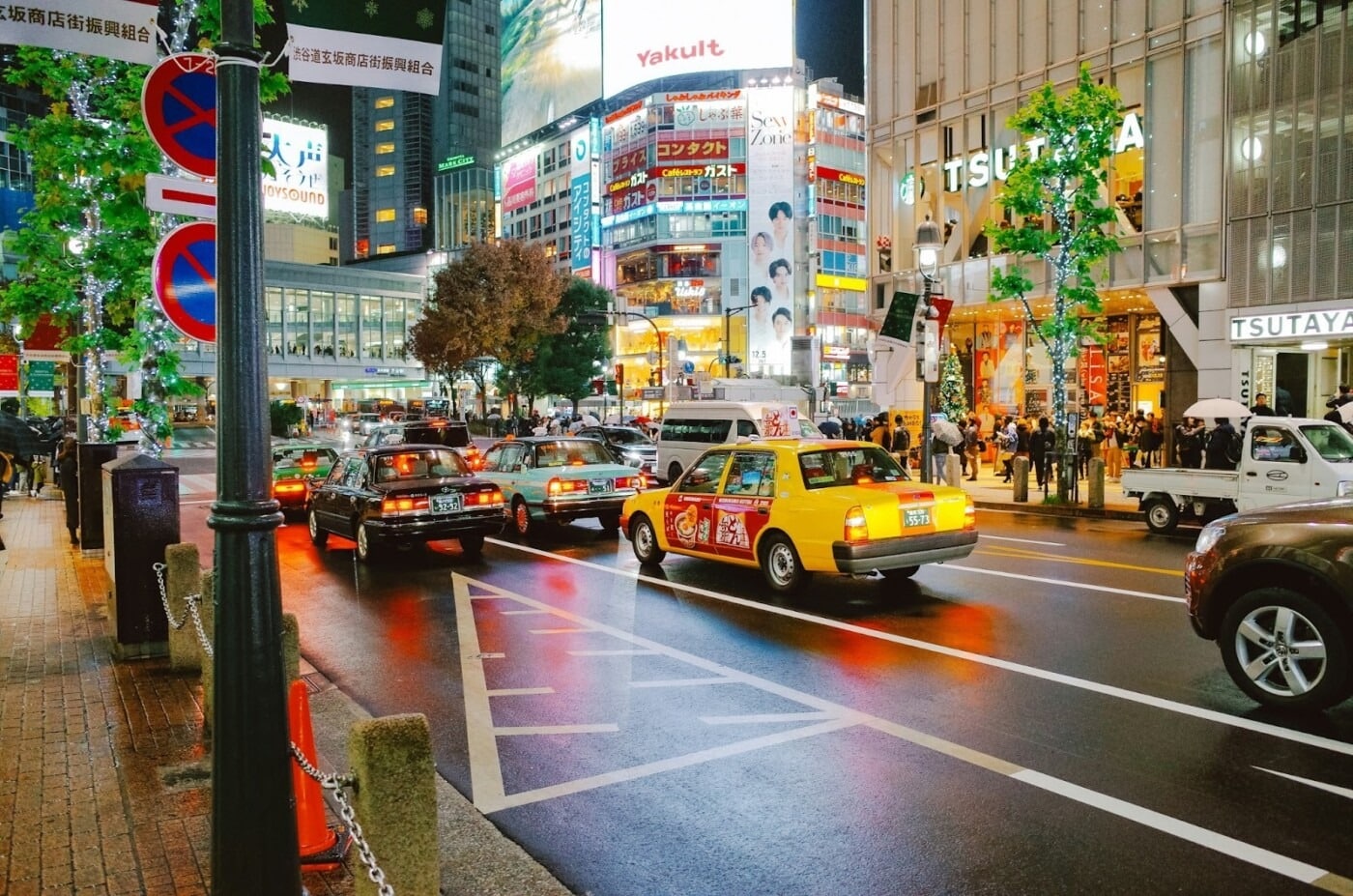
Tokyo rarely settles into one atmosphere. A loud street ends suddenly. A quiet one begins without warning. Food appears where space allows it. Shrines remain where history left room.
The city does not organise these elements into districts that make sense at a glance. They overlap. They coexist. You learn the pattern by moving through it repeatedly.
Tokyo feels less designed than adjusted.
Osaka Wears Its Energy Openly
Osaka feels more outward from the start. Food culture spills into the street. Conversations overlap. Movement is quick, but rarely tense.
Eating here feels expressive. Gestures are broader. Voices carry. You’re not expected to be discreet.
Even so, small shrines remain embedded in neighbourhoods, offering moments of pause without removing you from the street entirely.
Loud and Quiet, Back to Back
One of the things that stays with people is how easily noise and stillness sit next to each other. A busy alley opens into a calm courtyard. A crowded street runs alongside a place meant for reflection.
You don’t prepare for the change. You don’t mark it. You adjust instinctively.
The city trusts you to find the right volume.
No Single Pace to Follow
Japan’s lively cities don’t insist on speed or stillness. You can move quickly without feeling chased. You can pause without feeling in the way.
Street food supports momentum. Shrines support brief attention. Neither asks to dominate the experience.
The balance holds because nothing pushes too hard.
Remembering the Shifts, Not the Places
Later, what comes back isn’t a dish or a specific gate. It’s the feeling of small adjustments — slowing slightly, then speeding up again. Eating without sitting. Pausing without stopping.
These moments don’t line up into a story. They sit beside each other, unresolved.
You remember movement more than location.
What Doesn’t Ask to Be Explained
Japan’s cities don’t ask you to choose between lively and calm. They don’t frame street food and sacred space as opposites.
They allow both to exist without comment.
What stays with you is not contrast, but ease — the sense that attention can move in and out without effort, and that the city will continue to hold that balance whether you notice it or not.