I’ve started learning the cello! I’ve been at it for about a week now, and I’ve already sent one cello back and hired another. There’s also been a lot of squeaking.
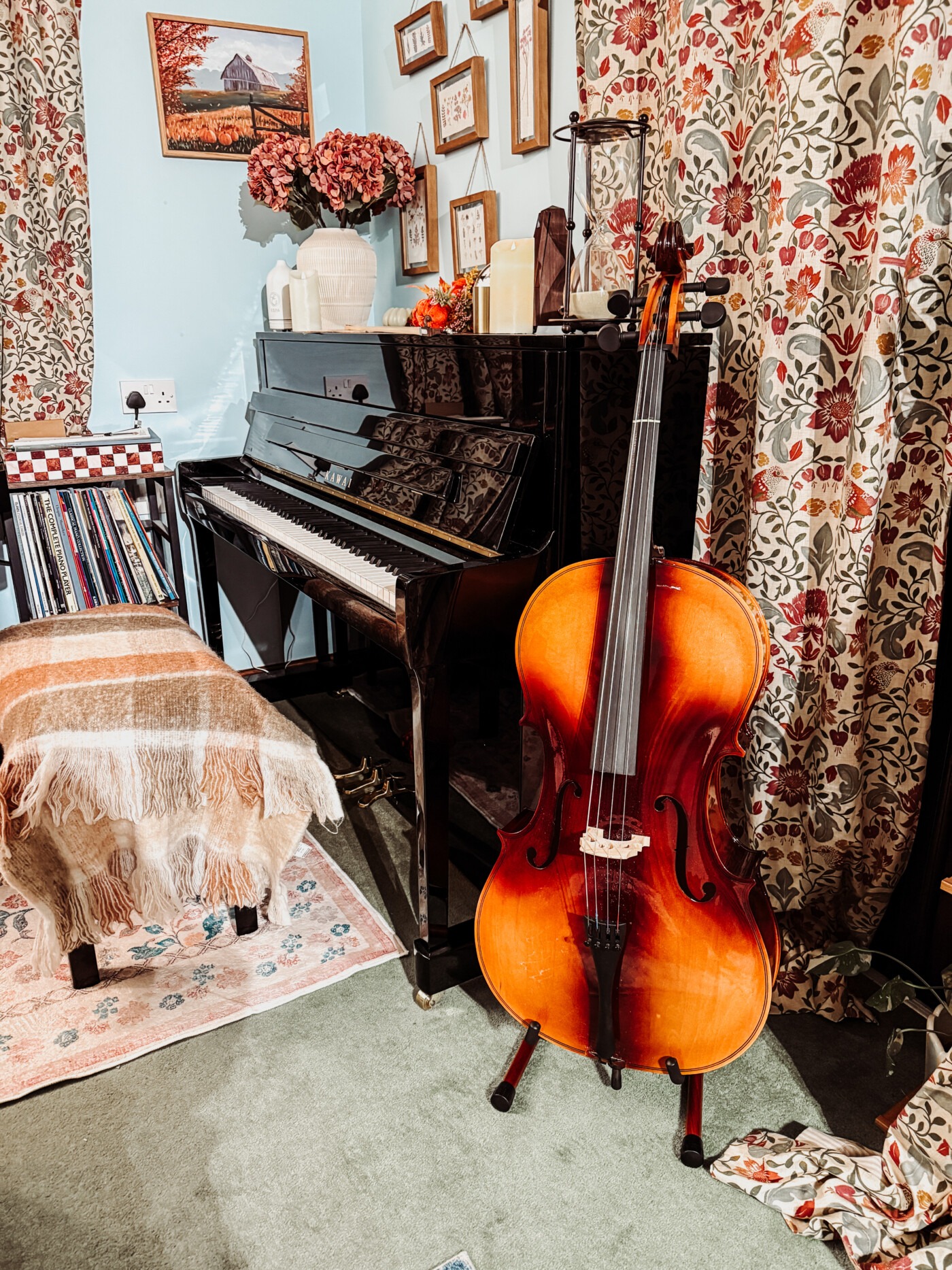
I’ve wanted to pick up a new instrument for ages. I did think about the violin for a while, but I kept coming back to the cello because of that deep, warm tone. I always fall in love with I hear cello playing alongside piano.
Why I Wanted to Learn a New Instrument
I’ve played the piano for years and I still love it, but I’ve hit a bit of a sticking point. To get any better, I’d need to put serious hours into grade 8 and diploma level pieces, and those pieces are long. We’re talking months and months of practice on one piece before it’s anywhere near ready. I don’t have that level of dedication, and it was sucking the joy out of playing.
So lately I’ve been playing easier music that I can sight read and just enjoy. I still get loads out of the piano. I get to play music I love and lose myself in it for a while, which is a lovely thing at the end of a long day. What I don’t get from it anymore is that new-thing excitement.
My ADHD brain craves that feeling all the time. It wants quick improvements and the buzz of getting noticeably better at something week by week. With a new instrument, the early grades come quickly, so the dopamine hits come quickly too.
Over the past few years I’ve leant into my urge to learn new things, and I’ve tried to put all that energy into something productive. For a long time I used those obsessive traits on negative and unhealthy behaviours. As I’ve got older, I’ve learnt to channel them into creativity instead. The cello is the latest one.
The Cello Mistake I Made First
This bit is a lesson in doing your research. The first cello I bought was from Gear4music, and it cost around £250. It was cheap, I didn’t look into it nearly enough before I ordered it, and it shows. It’s really not good quality, so I’m sending it back. I wouldn’t recommend it at all.
Cellos are so expensive, which is exactly why a £250 one looked so tempting. But a poor instrument makes learning harder than it needs to be, and learning is hard enough already.
Why I Decided to Hire a Cello Instead
I’ve ended up hiring a cello, and I wish I’d done it from the start. I’m renting a Hidersine Vivente 4/4 cello, which is known for being a very good quality beginner cello. After 12 months, I can pay off the rest and keep it.
Full price, it’s around £700, and that’s still a beginner one. Hiring means I’ve got a much better cello without paying all of that up front.
How I’m Learning the Cello
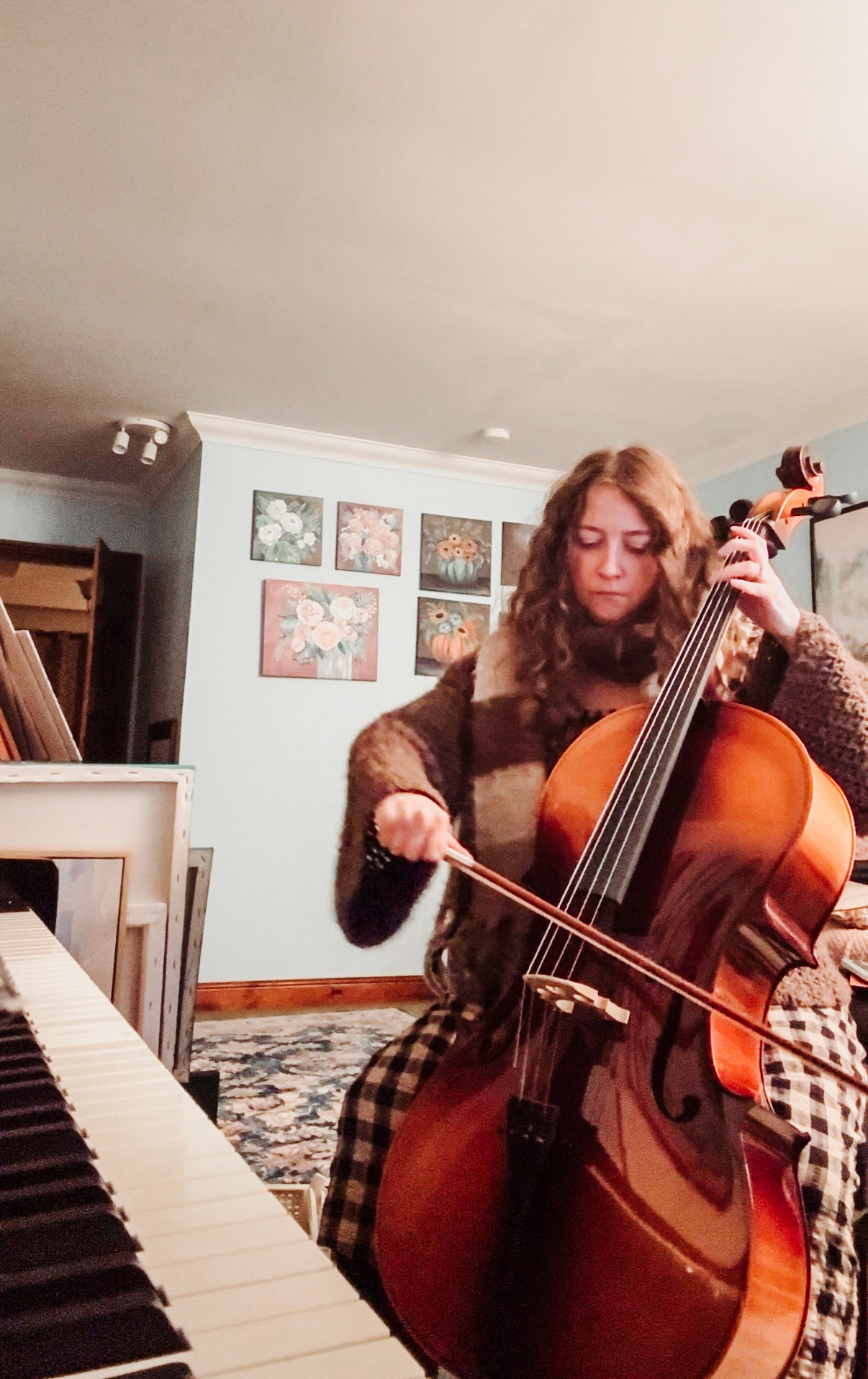
At the moment I’m teaching myself with a mix of YouTube videos and the ABRSM syllabus. I’ve been working through the Initial Grade, and I’ve found some easy pieces online to have a go at too.
I am going to look into getting a teacher, whether that’s an online teacher or a course of some sort. For now, I’m getting the basics sorted and finding my way around the cello.
I’m aiming for two short practice sessions a day. Little and often seems like the best way to get the basics to stick, and two short sessions are much easier to fit around work than one long one. I do about 15 – 30 minutes at a time. That gives me some good practice before my fingers start to hurt from the strings.
What’s Transferred Over From the Piano
Playing the piano has given me a head start, and I can already feel those transferable skills helping me through the first few grades.
Reading music. I can already read music, which makes everything so much easier. I’m not trying to learn notation and a new instrument at the same time, and as a pianist I’m used to reading bass clef with my left hand anyway.
Learning the notes. I learnt all the notes in first position really quickly, and it already feels natural to me.
Not looking at my fingers. When I sight read on the piano, I don’t look at my hands unless there’s a really big jump. I think some of that spatial awareness and muscle memory has come over with me, because I can play the notes on the cello without staring at the fingerboard. I know where my fingers are and where they need to go next.
Hearing when I’m out of tune.Years of piano and a childhood of music lessons where I had to play scales for exams mean I’m good with pitch, so I can hear straight away when I haven’t quite got a note right. On the piano, the note is either right or wrong. On the cello, you can be a tiny bit out and I’m good at spotting and correcting it.
What I’m Finding Hard
Bowing is the biggest challenge by far. Each string needs to be bowed at a different angle, and when I get it wrong it’s scratchy and squeaky. That’s really normal for beginners, but it doesn’t make it any nicer to listen to.
To work on it, I keep doing exercises on the open strings to get a more consistent sound, as well as practising my scales. I have a feeling speed is going to be the next problem once I start trying to play things faster.
Holding the bow is tricky for me too. It doesn’t feel natural yet, and I keep having to stop and adjust my grip.
My Cello Goals
My goal is to be able to play some cello pieces and play the piano accompaniment to them too. Bringing my two instruments together feels like the perfect reason to keep going with both. Also, there are some really nice-sounding pieces that are achievable for me.
For now, I’m working through the Initial Grade and the easy pieces I’ve found, and seeing how far I get.
Have you learnt a new instrument as an adult, or gone from piano to strings? I’d love to hear how you got on, so let me know in the comments!