Japan is a country where flowers are more than just beautiful decorations — they carry deep meaning, history, and emotion. From the soft pink of the cherry blossom flower to the elegance of the lotus flower, Japanese flower names reflect a culture that finds beauty in nature, simplicity, and even impermanence. Whether you’re exploring Japanese culture, looking for popular Japanese girl names, or simply fascinated by beautiful Japanese flowers, here’s a guide to the most iconic blooms and their flower symbolism.
- Cherry Blossoms – Sakura (桜)
- Plum Blossoms – Ume (梅)
- Japanese Camellia – Tsubaki (椿)
- Lotus Flower – Hasu (蓮)
- Japanese Iris – Ayame (菖蒲)
- Morning Glory – Asagao (朝顔)
- Red Spider Lily – Higanbana (彼岸花)
- Japanese Primrose – Sakurasou (桜草)
- Hydrangea – Ajisai (紫陽花)
- Flower Language – Hanakotoba (花言葉)
- A Living Tradition
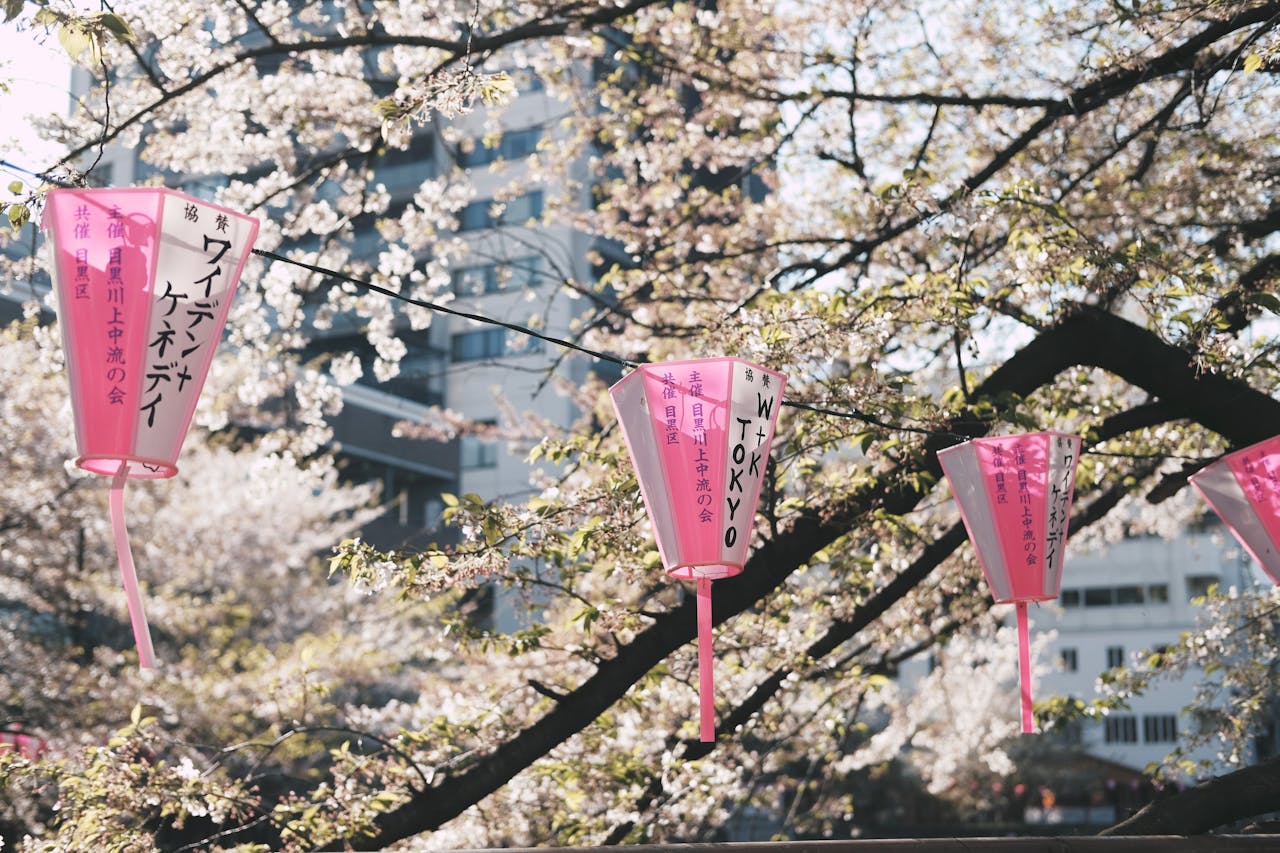
Cherry Blossoms – Sakura (桜)
No discussion of Japanese flower names is complete without the sakura flower. The cherry blossom tree bursts into full bloom in late March to early April, marking the arrival of spring in Japan. These delicate petals are perhaps the most popular flower in the country — a true symbol of wabi-sabi, the beauty of impermanence. During cherry blossom season, Japanese people gather for hanami picnics beneath the trees, celebrating life’s fleeting nature. The cherry blossom flower represents the short time we have on earth — a reminder of the fleeting nature of life and the importance of enjoying the present moment.
Plum Blossoms – Ume (梅)
Blooming in late winter before the cherry blossoms appear, plum blossoms are cherished for their resilience and strength. They symbolise good fortune, perseverance, and the quiet beauty of endurance. In Japanese tradition, they often represent good news and are seen as a sign that warmer days are coming. The plum blossom is also associated with Japanese art from the Edo period, where it was a common motif in paintings and prints, representing purity and the start of new beginnings.
Japanese Camellia – Tsubaki (椿)
The Japanese camellia is one of the most beautiful flowers in Japan and carries different meanings depending on its colour. Red camellias symbolise true love and are sometimes linked to a noble death, while white camellias represent purity and innocence. Historically, red camellias were worn by samurai and used as offerings to the imperial family, symbolising devotion and loyalty. The camellia is also associated with the imperial seal of Japan and remains a special flower in Japanese society today.
Lotus Flower – Hasu (蓮)
The lotus flower has spiritual importance in both Japanese folklore and traditional medicine. Growing from muddy waters to bloom beautifully on the surface, it represents the journey to enlightenment and the purity of the soul. It’s often used in Japanese art and temple gardens as a symbolic meaning of rebirth, strength, and serenity. To many Japanese people, the lotus embodies the idea that even in difficult times, beauty and calm can emerge — a concept also admired in Western culture.
Japanese Iris – Ayame (菖蒲)
The Japanese iris is known for its elegant purple flowers that bloom in late spring. Traditionally planted in Japanese gardens and near small trees, the iris is believed to ward off evil spirits and bring good luck. The sharp, blade-like leaves are thought to symbolise courage and strength, making it a fitting flower for Japanese boy names as well as unisex names. The iris often appears in flower arrangement traditions and is seen during the rainy season, when its colours are most vibrant.
Morning Glory – Asagao (朝顔)
A summer favourite, the morning glory opens its bright orange flowers and purples with the morning sun, closing by afternoon. It represents small love and affection that may only last a short time — yet is still cherished for its beauty. It became especially popular among Japanese parents during the Edo period, when it appeared in Japanese media, poems, and art. Today, it’s often given to close family members as a sign of gratitude and appreciation.
Red Spider Lily – Higanbana (彼岸花)
The red spider lily is one of the most striking flowers in Japan. Its vivid red petals bloom around the time of the autumn equinox and are often linked to Japanese folklore. These beautiful flowers carry a complex symbolic meaning — representing farewells, the separation of paths, and sometimes death and rebirth. Despite this, they’re also seen as a reminder that every living thing has its own cycle — a key concept in the natural world and Japanese tradition.
Japanese Primrose – Sakurasou (桜草)
The Japanese primrose blooms in early spring, often near rivers and flower fields. Its name literally means “cherry blossom grass” due to its similar appearance to the sakura flower. In Japanese culture, it symbolises gentleness, kindness, and remembrance. It’s one of those floral names sometimes used by Japanese parents as a unique Japanese girl name, symbolising youthful charm and purity.
Hydrangea – Ajisai (紫陽花)
During the rainy season, hydrangea flowers fill the lavender fields and temple gardens, turning shades of blue, purple, and pink. They symbolise heartfelt emotion and gratitude — feelings that change with the weather, much like the flower’s colour. Every Hydrangea Festival held near Mt. Fuji draws crowds who admire the flower’s delicate beauty and its ability to thrive in the rain.
Flower Language – Hanakotoba (花言葉)
In Japan, each flower carries a specific meaning through the language of flowers, or hanakotoba. Much like in Western culture, flower words are used to express emotion, friendship, and love. Some popular Japanese names are inspired by flowers — from Sakura for “cherry blossom” to Ren for “lotus”. These floral names often appear in Japanese media and baby name lists because they represent traits admired in Japanese society: purity, grace, and a deep connection to the natural world. Whether you’re naming a little girl or choosing a unisex name, Japanese flower names carry various meanings that link people to nature and history in a way that feels both poetic and timeless.
A Living Tradition
From the cherry blossom tree to the red spider lilies, Japanese flower names tell the story of a nation’s connection to nature, beauty, and impermanence. They remind us that flowers — like human life — bloom brightly, even if only for a short time. For many, this is the most important thing about Japan’s floral heritage: it teaches us to appreciate the present moment, find meaning in the natural world, and admire the artistry in every petal.