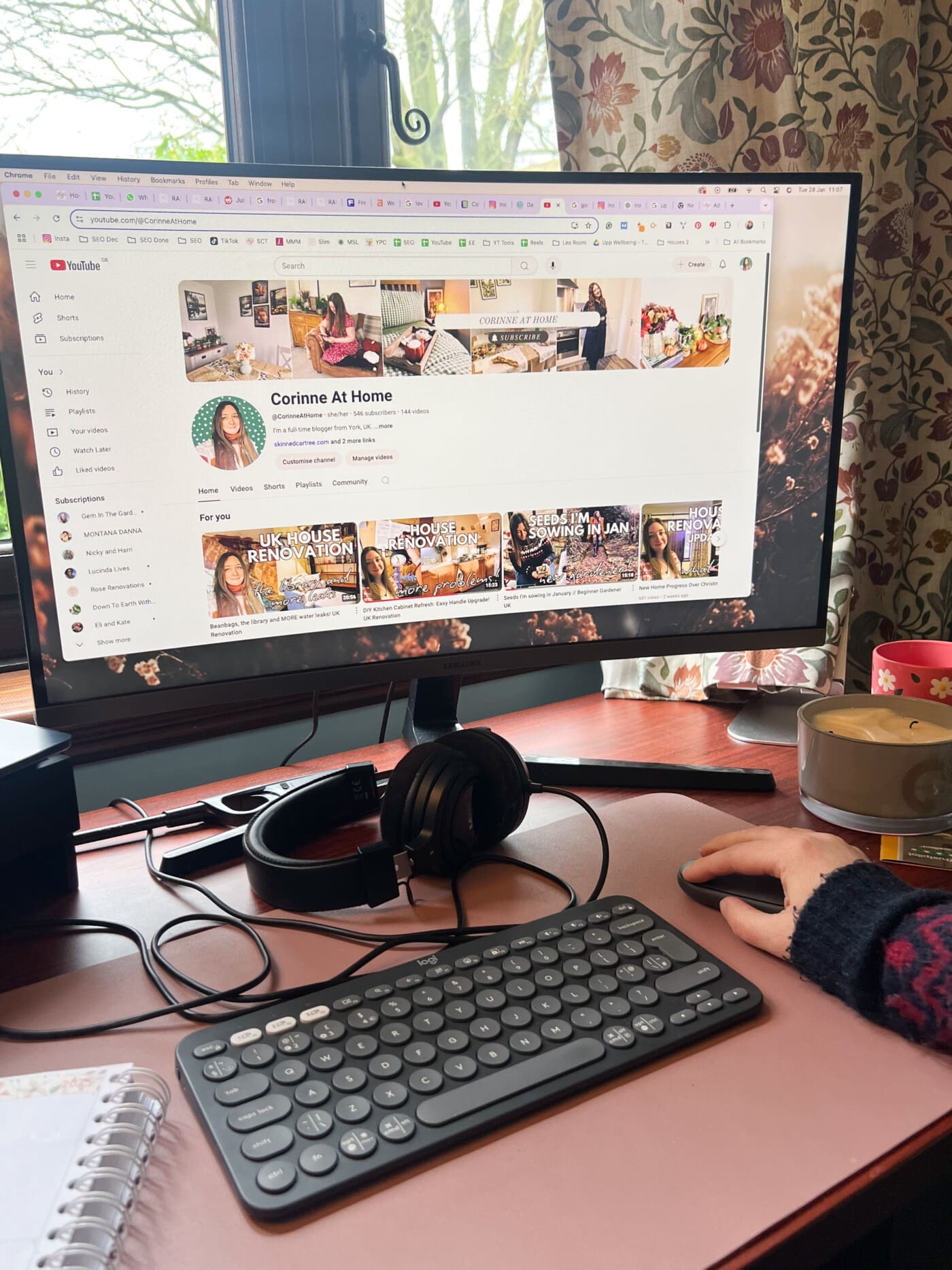
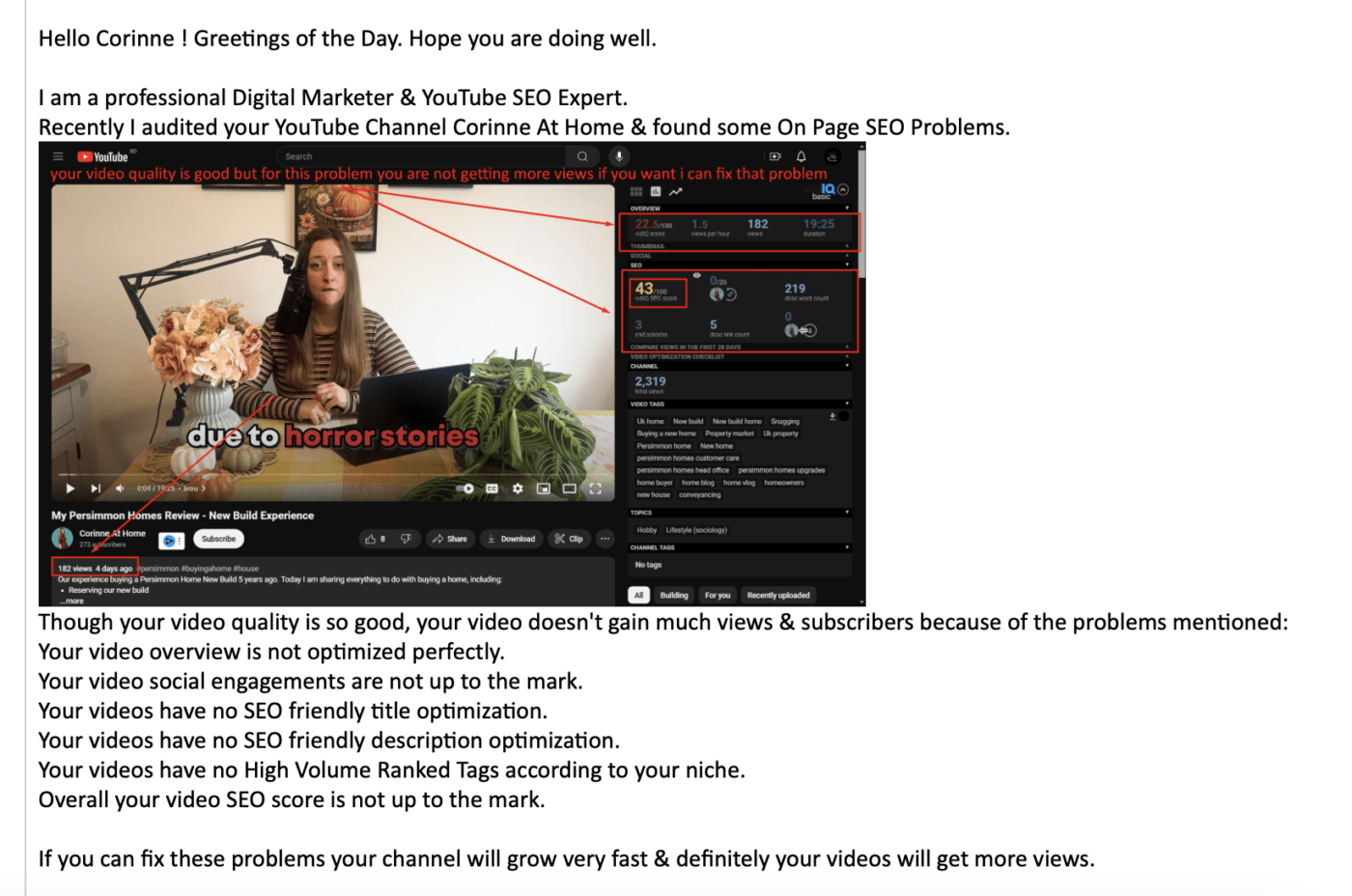
Are you tired of getting shady emails from YouTube SEO experts? Me too, all the time, I get emails telling me they can help grow my channel. Some even go as far as to screenshot my videos and tell me what’s bad in the descriptions, and highlight my low views, then message me on Instagram when I don’t reply to their emails!
Why Do These Emails Target You?
Scammers send these emails because you run a YouTube channel or create video content. They see potential in your online presence to sell fake services. Cold emails often target smaller creators who aim for better visibility and higher engagement. These users are eager to boost their video rankings or reach a wider audience, making them an easy target.
Typically, when someone starts a YouTube channel, they do so because they want to see growth and some income out of it. This means people can get desperate if things aren’t going the way they expected with their growth. They are more likely to fall for a scam such as this due to their inexperience and new passion to grow.
Common Features of Deceptive YouTube SEO Emails
Deceptive emails often use flashy promises to grab attention. They aim to make you act fast by creating a sense of urgency or fear.
Promises of Guaranteed Rankings
Promises of guaranteed rankings in SEO emails sound tempting but are often misleading. No one can control YouTube’s algorithm or guarantee the top spot on search engine results. These scammers use bold claims like “Top of Google Search Results in 30 days” to lure you into paying for unreliable services.
In reality, video optimisation and audience engagement take time and effort.
Good YouTube SEO strategies require using relevant keywords, engaging thumbnails, detailed descriptions, and viewer interaction tools like end screens. Always question any promise that sounds too quick or easy—it’s likely a trap.
Offers of Free Content or Backlinks
Some emails promise free content or backlinks. They claim these will boost your YouTube channel’s visibility. But such offers often hide hidden costs or poor quality work. Free backlinks may harm your video SEO strategy if they come from unreliable sources.
Offering “free content” can mean plagiarised articles or irrelevant blog posts. This damages your reputation and brings no real traffic to your videos. Be cautious of anyone pushing quick fixes without reviewing your actual business needs first.
Scary or Overwhelming Reports
Scammers often send emails with alarming reports about your YouTube channel. They claim your video titles, descriptions, or performance are hurting search engine rankings. These fake reports create pressure to buy their youtube seo services quickly.
Such emails might highlight issues like low click-through rates or poor watch time. They may push you into thinking your content strategy fails to reach the right audience. This scare tactic aims to confuse and trap you into paying for unnecessary seo campaigns.
Types of SEO Scams in YouTube Emails
Scammers use sneaky tricks to fool creators into fake SEO deals—read on to spot them.
Fake Google Lighthouse Reports
Fake Google Lighthouse reports are common tricks in SEO scams. These scammers send fake performance audits of your YouTube channel or website. They claim the report shows poor SEO work, slow site structure, or bad user experience.
The reports look technical and official but are not real. Scammers use these to scare you into buying their video SEO services or optimisation plans. Often, they promise quick results like boosting your rankings on search engines or improving key metrics like viewer engagement—none of which happen.
Claims of Insider Knowledge of YouTube’s Algorithm
Some scammers claim to know YouTube’s algorithm like an insider. They promise high rankings or huge reach for your videos. These claims are false. YouTube doesn’t share its full algorithm details with anyone, not even the best youtube seo experts.
They may say they have “proprietary software” or secret tools for video optimisation. This is a lie to make their pitch sound special. No one can guarantee success on the world’s second-largest search engine without proper content creation and strategy.
Offers of Fake Traffic Boosts
Some SEO scammers promise fake traffic boosts to your videos. They claim they can quickly increase views or likes, but this tactic harms your channel. Fake users or bots do not engage with content, and YouTube’s algorithm detects such activity.
This may lead to penalties, like lower rankings.
Real engagement matters for video performance on YouTube analytics. Focus instead on reaching potential viewers through proper video optimisation, compelling thumbnails, and using the right keywords in titles and descriptions.

How to Spot and Avoid SEO Email Scams
Spotting SEO scams can save you time and stress. Watch for red flags and trust your instincts to avoid falling into traps.
Look for Generic or Copy-Paste Pitches
Many SEO email scams rely on generic messages. These pitches often use copy-paste templates without addressing your specific YouTube channel or content. They may claim to improve your video optimisation or boost website traffic but fail to provide in-depth insights about your videos.
Such emails might include vague promises like getting you “to the top of search results” within a set time frame. They sometimes mention unrelated details, showing they lack real understanding of your target market or keyword research needs.
Verify Credentials and Claims
Check the sender’s website and portfolio. Reputable SEO professionals or agencies will have an online presence that shows their work. Lack of clear information could mean they are untrustworthy.
Ask for proof of results with case studies or analytics reports. Real experts in video optimisation provide data to back up their claims. Fake specialists typically avoid sharing concrete examples of success.
Avoid Unsolicited Offers Promising Quick Results
Unsolicited email offers promising quick YouTube SEO results often lead to disappointment or worse, scams. These pitches claim they can grow subscriber bases, improve video rankings, or boost the reach of your videos overnight.
Real YouTube SEO strategies take time and effort, focusing on proper video optimisation like using target keywords in a video’s title or description.
Shortcuts may hurt your YouTube presence instead of helping it. Fake traffic boosts or rushed approaches might damage long-term growth, as platforms like YouTube rely on genuine user engagement for ranking websites higher.
A strategic approach always works better than risky shortcuts offered by unknown SEO specialists claiming instant success.
Here’s some emails I’ve received:


Conclusion
Scam SEO emails can waste your time and money. They prey on creators looking for quick success. Stay cautious, ask questions, and avoid promises that seem too good to be true. Protect your channel by trusting proven methods over flashy offers.
Just ignore and delete any messages you get claiming to help grow your channel.
Have you had any video seo experts email you?
Related posts: