Stepping onto an aging wooden deck often feels like stepping onto a long to-do list of sanding, staining, and replacing warped planks. You want an outdoor space where you can relax with family or host friends without losing every spring weekend to heavy maintenance.
Modern home upgrades solve this frustration by trading bulky, high-maintenance lumber for streamlined outdoor lounges. When you focus on clean architectural lines, hidden fasteners, and weather-resistant materials, your backyard becomes a low-maintenance extension of your living room.
What should you check before starting construction?
Great surface boards mean very little if the frame underneath cannot support them. Composite planks are heavier than traditional wood and require tighter joist spacing – typically 12 to 16 inches on center – to prevent sagging over time. Before breaking ground, your builder must inspect the ledger board attachment, verify footing depths below the frost line, and secure local municipal permits.
Working with experienced builders takes the guesswork out of structural engineering and local zoning rules. Specialized crews like Platinum Decking handle full architectural design, permitting, and composite installation so your project meets strict safety codes from the ground up. Proper flashing around the house connection also prevents hidden water damage to your home’s framing.
Why are homeowners switching to composite boards?
Traditional wood decks demand constant upkeep to fight off moisture, rot, and splinters. Pressure-treated pine warps under the summer sun, while natural cedar requires annual sealing to keep its warm color from turning a dull gray. Composite decking eliminates that cycle by giving you the rich look of natural grain without the yearly chores.
Manufacturers engineer these boards to withstand harsh weather swings without cracking or fading. According to the American Chemical Society, composite decking combines recycled wood fibers with durable plastics like high-density polyethylene to create a dense, weather-resistant plank. You simply wash the surface with soap and water a few times a year to keep it looking brand new.
How do hidden fasteners create cleaner lines?
Exposed screw heads and popped nails ruin the visual flow of an otherwise sleek backyard design. They collect water, trap dirt, and create snag hazards for bare feet. Switching to hidden fastening systems changes the entire look of your deck surface by tucking hardware out of sight between the boards.
Builders often install a contrasting border board around the outer edge of the deck, a technique known as picture-framing. This design trick hides the cut ends of the main planks and creates a crisp, tailored boundary that anchors your outdoor furniture.
What features turn a deck into an outdoor lounge?
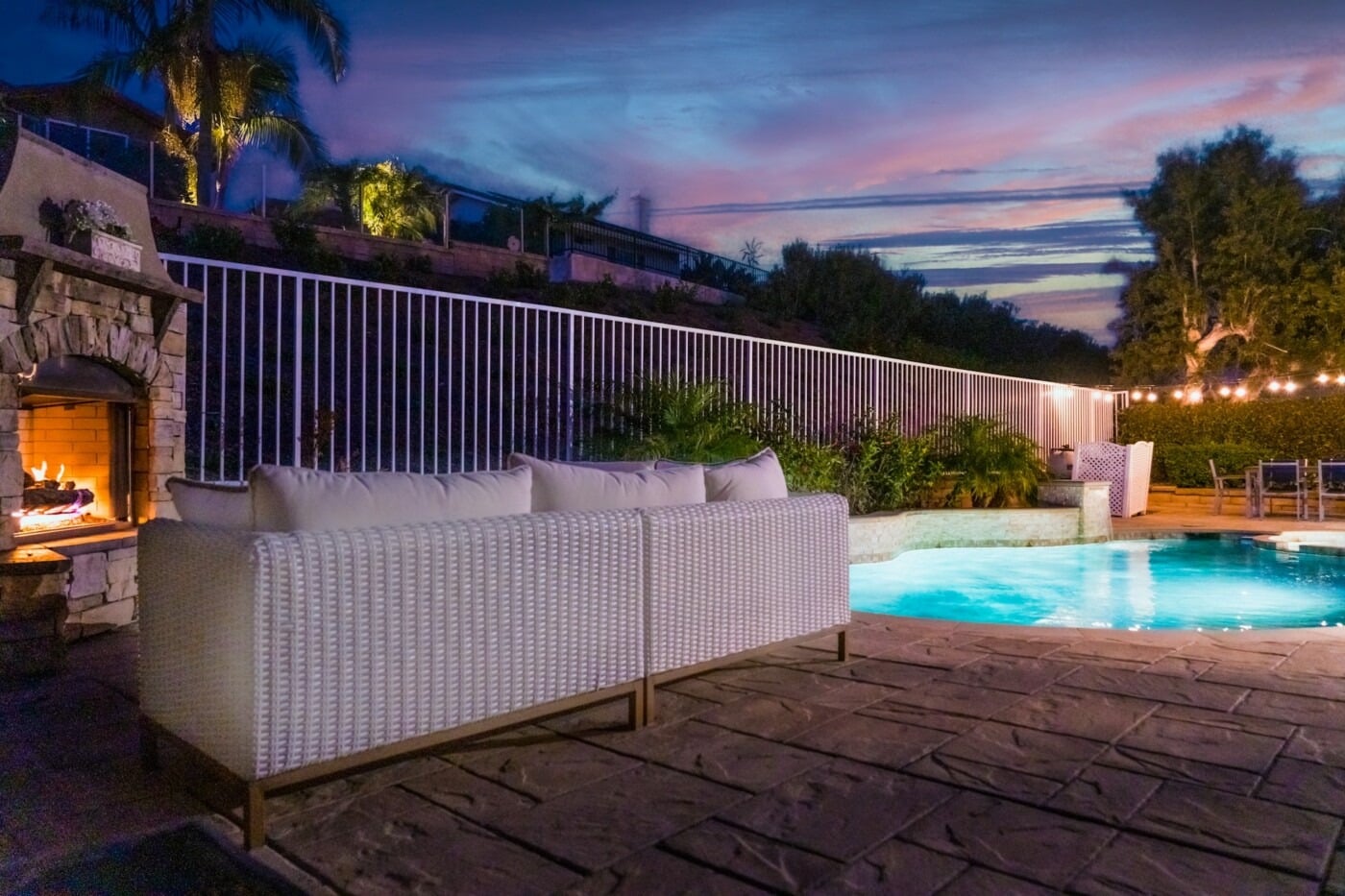
A modern deck works best when it functions like an indoor room rather than a flat wooden platform. You can define separate zones for cooking, dining, and lounging by pairing clean architecture with smart, built-in amenities.
- Low-voltage step lights: Recessed LEDs tucked into stair risers and post caps guide your guests safely after dark without harsh overhead glare.
- Built-in bench seating: Perimeter benches save floor space, eliminate the need for bulky patio chairs, and offer hidden storage underneath for cushions.
- Sleek cable railings: Thin stainless-steel cables or dark aluminum balusters preserve your backyard view while keeping the perimeter safe.
- Flush-mount planters: Integrating planters directly into the deck frame softens the hard architectural lines with native grasses or herbs.
How does material longevity affect your long-term budget?
Upfront costs for composite materials run higher than pressure-treated lumber, which makes some homeowners hesitate during the planning phase. Looking at the 20-year picture tells a completely different story. When you factor in the recurring price of stain, sealers, replacement boards, and your own weekend labor, wood quickly loses its initial price advantage.
Researchers publishing through the National Center for Biotechnology Information have studied how composite materials resist aging and physical deformation over extended outdoor exposure. Choosing high-grade capped composites protects your investment against UV fading and moisture absorption, keeping your deck structurally sound and visually sharp for decades.
How do you maintain your new composite space?
Caring for a modern composite deck takes a fraction of the effort required for natural timber. You never need to sand, stain, or paint the surface, which frees up your warmer months for actual relaxation.
Sweep away leaves, pine needles, and pollen regularly so organic debris does not trap moisture in the gaps between boards. A quick rinse with a garden hose and a soft-bristle brush removes everyday dirt and keeps drainage channels clear.
Building a backyard retreat with clean lines and durable composites transforms how you use your property every single day. By prioritizing solid substructure engineering, hidden hardware, and weather-resistant materials, you create a welcoming outdoor lounge that stays beautiful for decades without demanding constant upkeep.