Baby milestones are essential markers of your child’s development, offering parents insight into their baby’s growth and progress. Understanding these developmental milestones helps parents recognize and celebrate their baby’s achievements while also identifying any areas where early intervention might be needed.
Baby milestones can be such a fun thing to track! I love the idea of a baby memory book to keep a special note of all those firsts!

What Are Baby Milestones?
Baby milestones are specific skills or abilities that most babies can do by a certain age. These can include a wide range of activities, such as smiling, waving bye bye, or taking the first steps. These milestones help track a baby’s development across various domains, including physical, cognitive, social, and emotional development.
Key Developmental Milestones
- Gross Motor Skills: By around six months, many babies start sitting without support. This is a significant developmental milestone indicating improved muscle strength and coordination.
- Fine Motor Skills: The pincer grasp, where a baby uses their thumb and forefinger to pick up small objects, typically develops between 9 and 12 months. This skill is crucial for feeding and playing.
- Language Development: Babies usually start making different sounds by six months, with simple words like “mama” or “dada” emerging around their first birthday. These first words are critical milestones in language development.
- Social and Emotional Skills: Recognizing familiar people and making eye contact are early signs of social development. By the one-year mark, many babies enjoy playing games and can follow simple directions.
Tracking Your Baby’s Developmental milestones
Every child is unique and develops at their own pace. While most babies reach certain milestones around the same time, some may progress faster or slower. It’s important for parents to remember that children develop differently. If you have concerns about your child’s development, consult your pediatrician. Early intervention can be crucial in addressing any developmental delays.
Developmental Milestone Charts
Developmental milestone charts can be a helpful tool for tracking your baby’s progress. These charts outline typical age ranges for various milestones, such as when babies start crawling or recognize names. Monitoring these milestones helps parents understand their baby’s development and identify when their child may need additional support.
Importance of Play in Child Development
Play is a vital part of children’s development. Toys and games are not just for fun; they are essential for learning and growth. For example, pull toys encourage walking, while a large ball can help with coordination and gross motor skills. Simple gestures like waving bye bye or shaking head, and pretend play, are also important for social and emotional development.
Tips for Supporting Your Baby’s Development
- Encourage Exploration: Provide a safe environment for your baby to explore and interact with objects. Familiar objects can stimulate curiosity and learning.
- Talk and Read: Engage with your baby through talking and reading. This helps in language development and builds a strong parent-child bond.
- Play Together: Participate in playtime. Use toys that promote learning, such as blocks, dolls, and books. Playing stops when your baby loses interest; follow their cues to make playtime enjoyable.
- Monitor Progress: Keep track of your baby’s developmental milestones using a chart. Note any milestones your baby reaches and discuss them during pediatric visits.
Recognizing When to Seek Help
If your baby is born early, they may reach milestones later than full-term babies. This is normal and should be considered when tracking development. However, if you notice significant delays in reaching milestones, or if your baby development seems off, early intervention is key. Speak to your pediatrician if you have any concerns.
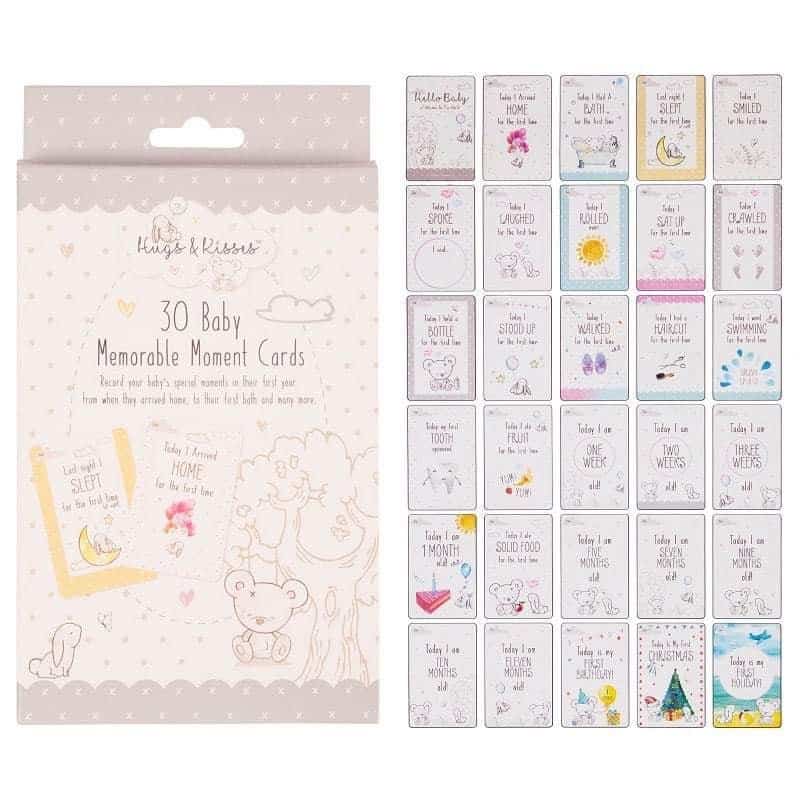
Milestone Cards
To make tracking these special moments even more memorable, Pink and Blue Hampers offer beautifully designed baby milestone cards. These cards provide a delightful way to document your baby’s developmental milestones, allowing parents to capture and celebrate each significant achievement with a photograph. Each card marks an important event, from the first smile to the first steps, making it easy to create lasting memories of your baby’s development.
What Are the Baby Milestones in Order?
Baby milestones are significant achievements in a child’s development, typically occurring in a predictable sequence. These milestones start with early reflexes and responses, such as grasping and rooting, in the first few months. By around two months, babies often begin to smile and respond to familiar faces. At four months, many babies start to push up on their elbows during tummy time and begin to babble. By six months, babies usually sit without support and can transfer objects between hands. Around nine months, babies often develop the pincer grasp, allowing them to pick up small objects with their thumb and forefinger. At one year, many babies can stand without support, say a few simple words, and engage in basic pretend play. By 18 months, toddlers typically start walking independently, follow simple directions, and use several words. At two years, children can run, climb, and form simple sentences, showing significant progress in their motor and language skills.
What Is the Most Important Baby Milestone?
While all developmental milestones are crucial, one of the most important is the ability to communicate, often marked by the first words. Language development is a key indicator of cognitive and social growth. The ability to speak allows babies to express their needs, interact with caregivers, and explore their environment more effectively. This milestone typically occurs around the first year and signifies a major leap in cognitive development, paving the way for more complex language skills and social interactions. Early intervention is vital if delays in language development are observed, as it can significantly impact a child’s overall development.
What Do Babies Do by Month?
Babies grow rapidly, and each month brings new abilities and milestones. In the first month, babies primarily focus on feeding, sleeping, and adjusting to their new environment, often referred to as a “strange new world.” By the second month, babies begin to smile and make simple cooing sounds, recognizing familiar objects and faces. At three months, they typically gain better head control and start to follow objects with their eyes. By four months, many babies can roll from tummy to back and begin to show interest in toys. At six months, babies often sit without support and babble with consonant sounds. By nine months, they may crawl, use the pincer grasp, and recognize familiar people. At 12 months, babies commonly stand without support, say simple words like “mama” or “dada,” and play simple games. Each month marks significant steps in their physical, cognitive, and emotional development, contributing to their overall growth.
Conclusion
Understanding baby milestones and supporting your child’s development through active engagement and monitoring is essential for their growth. By recognizing and celebrating each developmental milestone, parents can ensure their baby’s development is on track, fostering a healthy, happy child.
Remember: Every child develops at their own pace. The milestones provide a general guide, but your baby may achieve them at their unique speed. Always support and encourage your child’s development, and seek professional advice if you have concerns.