I LOVE April for gardening. It’s basically the month of potential, with so many options on what to grow! I feel like this time last year, I was so much further ahead, but I sowed some vegetables too early, so I held off this year. I’m trying to find balance as it’s only my second season in this garden. But it’s not too late to start.
Here’s what I’m doing in my garden this April, plus what you should be planting and tackling to set yourself up for the best growing season possible.

April in My Garden
In April, the soil is finally warming up, the risk of hard frosts is dropping, and suddenly you’ve got this narrow window where everything needs to happen at once, and it can be a bit stressful.
This happened to me this year, as I feel like March went by so quickly, and now I’m juggling seed trays indoors, hardening off young plants, prepping beds outside, and trying to remember which vegetables can actually handle a cold snap and which ones will sulk for weeks if I jump the gun.
It feels like I’m racing against the calendar while watching the weather forecast for a few warm days to get some outdoor seeds germinating. This month I’m sowing beans, planting out early potatoes, hardening off my sweet peas, and crossing my fingers that late April doesn’t throw a surprise frost that ruins everything.
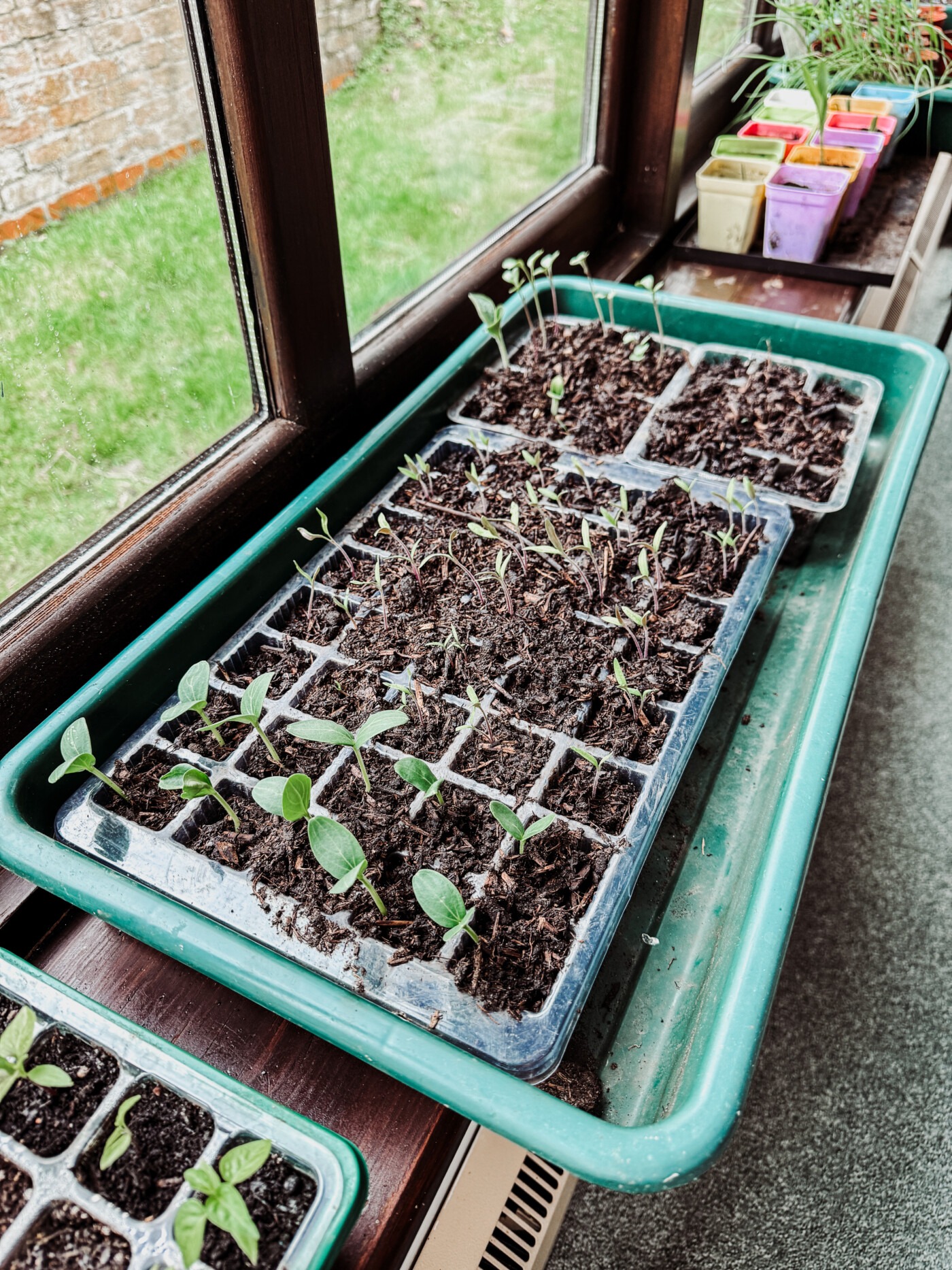

Sowing Seeds Indoors and Under Cover
April is prime time for starting tender crops that need a head start before they can handle life outside.
Most gardeners waste this window by either sowing too early (as I did last year) and watching seedlings get leggy on a windowsill, or by waiting too long and missing the ideal planting date for early summer harvests. The sweet spot is sowing now, in early to mid-April, so your plants are strong enough to go out after the last frosts in late May or early June.
What I’m sowing indoors this month:
- Tomatoes – three varieties
- Cucumbers
- Aubergines
- Cauliflower
- Sweet peppers
- Squash seeds, courgettes, butternut squash and pumpkins
- Half-hardy annuals like cosmos, sweet peas and sunflowers.
- Onion sets
- Cucamelons
These are in my conservatory, which gets sun on it all day! I’ve been keeping an eye on the temperature and brought them in a few days when it got colder, but mostly it’s above 20 °C during the day with lots of light.
The key is giving everything enough light. On dull days, seedlings can still stretch toward windows and get weak. Rotate trays daily or use a grow light if your windowsill is dim.
Start these now, and you’ll have strong young plants ready to go outside the moment conditions allow. Wait another few weeks, and you’re looking at late harvests or buying plug plants at the garden centre instead.
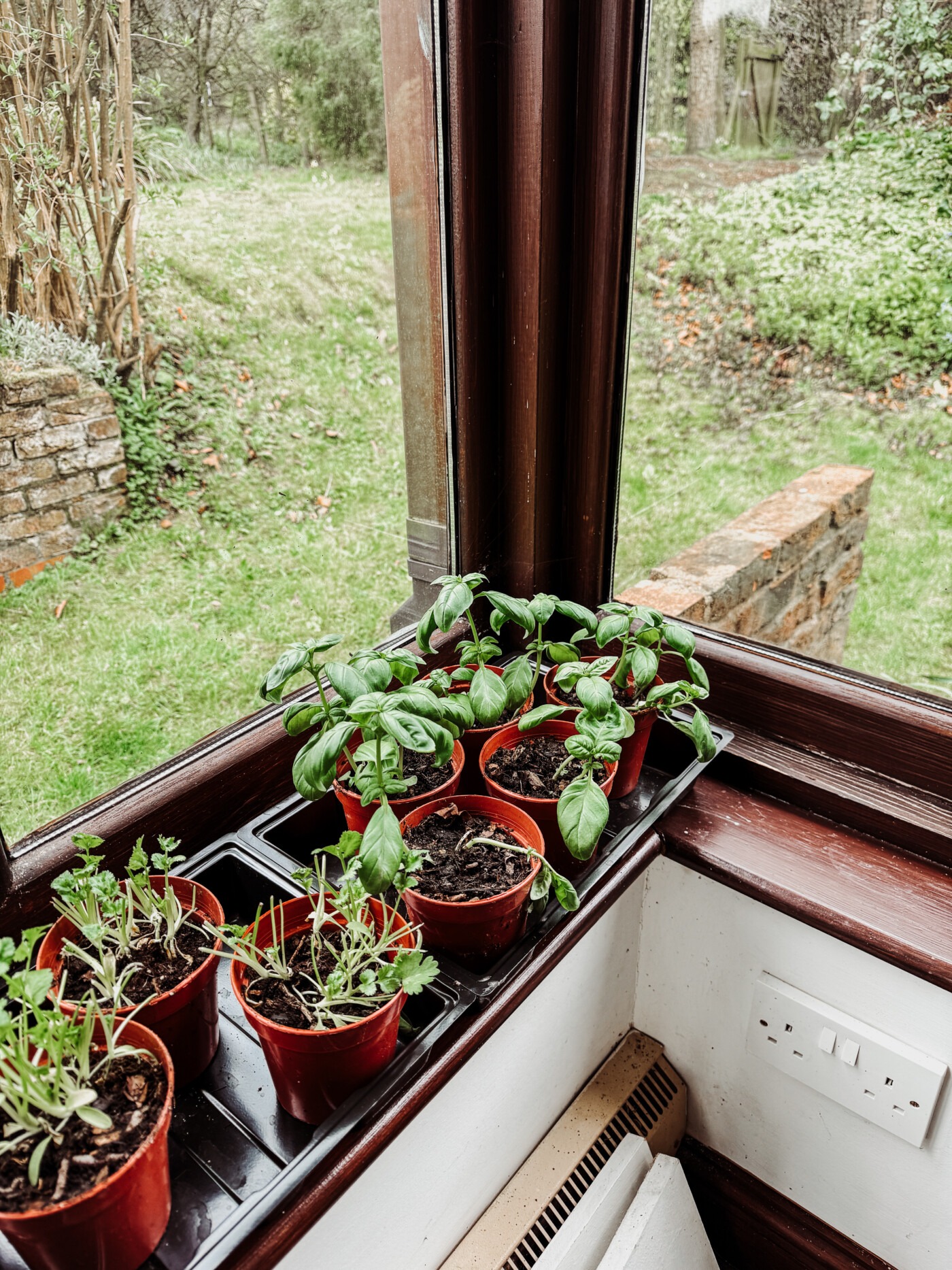
Hardening Off Young Plants
Young seedlings that have lived their whole lives indoors are soft. The stems are tender, the leaves haven’t built up protective waxes, and they’ve never dealt with wind, direct sun, or temperature swings. If you move them straight from a warm house to an exposed vegetable garden, they go into shock. Growth stops, and some die.
Here’s how to harden off without losing plants:
- Start in mid to late April, about two weeks before your planned planting date.
- Move trays outside to a sheltered spot for two hours on day one.
- Add an hour or two each day, gradually increasing exposure to sun and wind.
- Bring them in at night for the first week if temperatures drop below 7°C.
- By week two, leave them out overnight unless frost is forecast.
- After 10 to 14 days, they’re tough enough to plant out.
A cold frame makes this process almost automatic. You open the lid a crack more each day, and the plants acclimatise without you shuttling trays back and forth. If late frosts threaten, just close the frame at night.
If you skip hardening off, you’ll spend weeks watching expensive seedlings sit there doing nothing while the growing season ticks away. This happened to me with a few things last year – my aubergines and peppers were stuck at a similar size for weeks!

Direct Sowing Hardy Vegetables Outside
The soil is warming up, which means it’s finally time to sow straight into the ground.
Early April is still risky for many crops, but hardy vegetables don’t mind a bit of cold soil and will germinate happily as long as the ground isn’t waterlogged. If you wait for perfect conditions, you miss out on weeks of potential growth. If you sow too early into cold, wet soil, seeds rot.
The trick is checking soil temperature, not air temperature. Stick your finger two inches into the soil. If it feels painfully cold, wait a week. If it feels cool but not freezing, you’re good to go. Or if you’re like me, just do it anyway and see what happens.
What I’m direct sowing in early to mid-April:
- Early carrots and parsnips in well-prepared soil with no stones or clumps.
- Radishes as a quick filler crop between slower vegetables.
- Salad leaves in shallow drills for cut-and-come-again harvests.
- Peas and mangetout with pea sticks already in place, so I’m not scrambling later when they flop over.
- Spring onions in short rows every two weeks for a continuous supply.
- Cauliflower – experimenting with indoor vs outdoor sowing.
- Spinach and Chard
- Broccoli
- Leeks
For anything sown outdoors this month, you can cover the rows with horticultural fleece if the forecast shows cold nights below 5°C. It holds just enough warmth to keep germination moving and protects young seedlings from getting hammered by April showers or surprise frosts.
By the end of April, soil temperatures are high enough to sow tender crops like runner beans directly if you want to skip the indoor sowing step. They’ll catch up fast once the soil is warm. Direct sowing in April gives you harvests weeks before the people who wait until May to start.
If you have a cold frame or unheated greenhouse, you can direct sow hardier vegetables like Swiss chard, kohl rabi, and perpetual spinach. They’ll germinate slower than indoors, but won’t need hardening off later.
But I’ve just chucked them outside to see how they do – I have loads of seeds that are coming up to expiry, so I will just sow more if nothing germinates.
Planting Potatoes and Other Staples
April is potato month; early potatoes go in first, ideally by early April, because they need roughly 10 to 12 weeks to mature, and you want them out of the ground before blight season hits in mid-summer. Maincrop potatoes can go in through late April, but earlier is better if your soil is workable.
I plant mine in well-drained soil with plenty of organic matter dug in a few weeks earlier. Heavy clay soils need extra prep because waterlogged potatoes rot fast. If your soil is heavy, consider mounding up rows or planting in raised beds.
I’ve planted some potatoes that we got from a local farm at Christmas. They started growing roots, so I just planted them to see if they will grow! I’ve got some other potatoes chitting that I need to plant soon.
I always leave a bit of space in the planters so I can earth them up as shoots appear to protect new growth from late frosts and encourage more tubers to form along the buried stems. This seemed to work well for me last year.
Other jobs I’m doing this month:
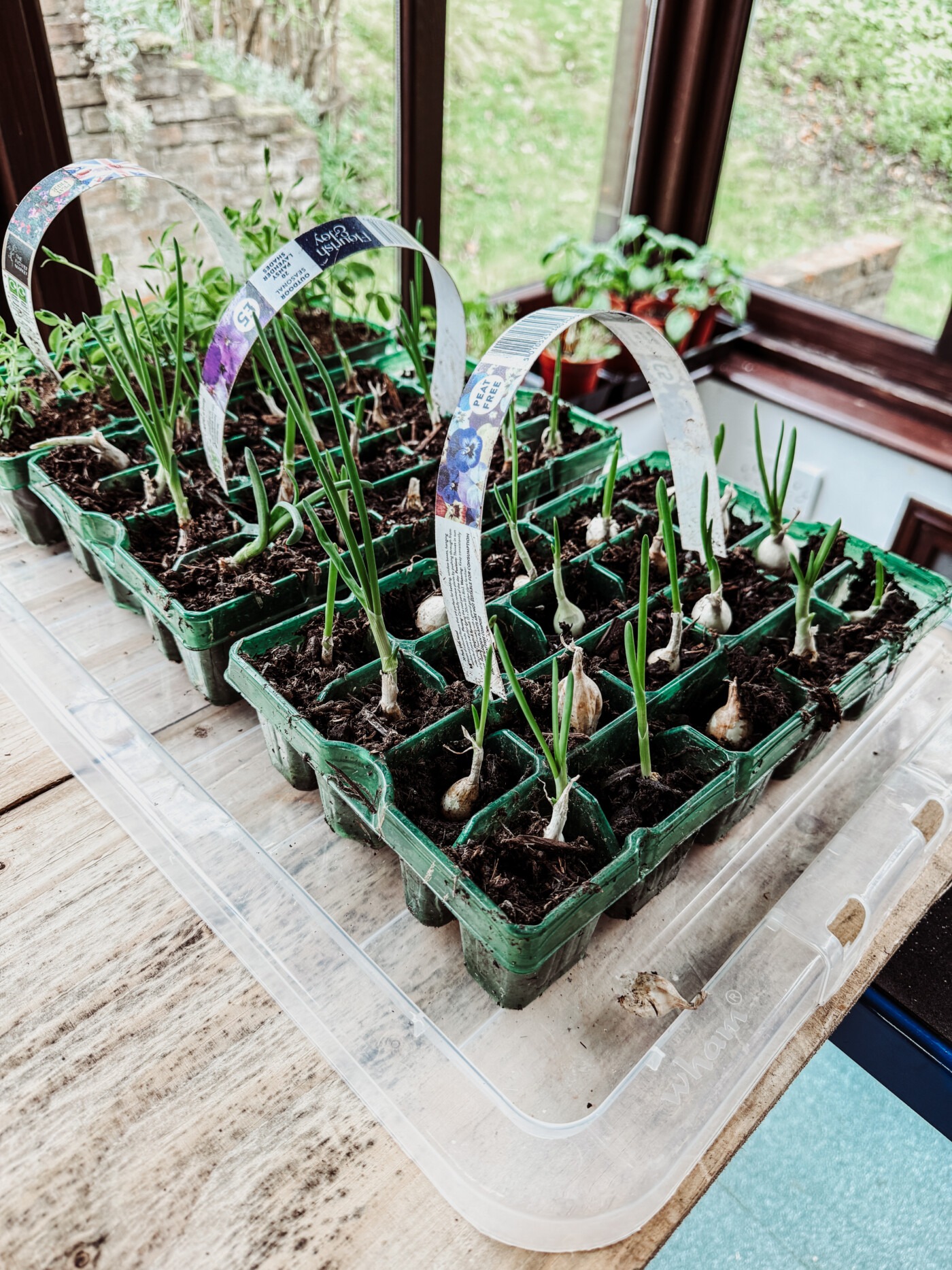
- Planting out onion sets that have been hardening off since late March.
- Potting up strawberry plants that I grew from suckers last year. I potted them in small pots and cut the runners once they had rooted. Now I’ve doubled my strawberry plants – though they don’t tend to produce much in the first year.
- I repotted soft fruit bushes that I got last year; they’ve somehow survived the winter, and I’ve got about 6 raspberry bushes now.

Protecting Against Late Frosts
April can be hit-or-miss for temperatures. You’ll get warm days that trick you into thinking winter is over, then a clear night in late April drops temperatures to freezing and kills everything tender you planted out too early. New growth on fruit trees, fresh shoots on perennials, and any half-hardy plants you got overconfident with are all vulnerable.
The risk of frost doesn’t disappear until late May in most of the UK, so here’s how to protect your crops against late frosts:
- Keep horticultural fleece on hand and drape it over young plants when frost is forecast overnight.
- Use cloches or cut-off plastic bottles over individual plants like courgettes or beans planted early.
- Move container plants back under cover on cold nights rather than risking them outside.
- Delay planting out the most tender crops like tomatoes, peppers, and squash until after the last expected frost date in your area.
A frost-free greenhouse or cold frame solves most of this by giving you a controlled environment where you can keep tender plants safe until warmer temperatures arrive for good. I keep most things in the conservatory.
Getting on Top of Weeds Before They Explode
Weeds are waking up just as fast as your vegetables and with far more enthusiasm.
Perennial weeds like dandelions, docks, and bindweed are pushing new shoots, and if you let them establish now, they’ll be impossible to control by June. Annual weeds are germinating everywhere the soil is bare, and each one you miss now turns into hundreds of seeds by the end of the month.
I tend to pull them out as I see them, and then I’ll use freshly cut grass to mulch around my plants to try to suppress new weeds by blocking the light. I’m always going to get things growing where I don’t want them to, though. We have a big garden with lots of trees, wildflowers and weeds, so I do try to pull things up before they go to seed to stop them spreading!
Feeding and Mulching Flower Beds and Borders
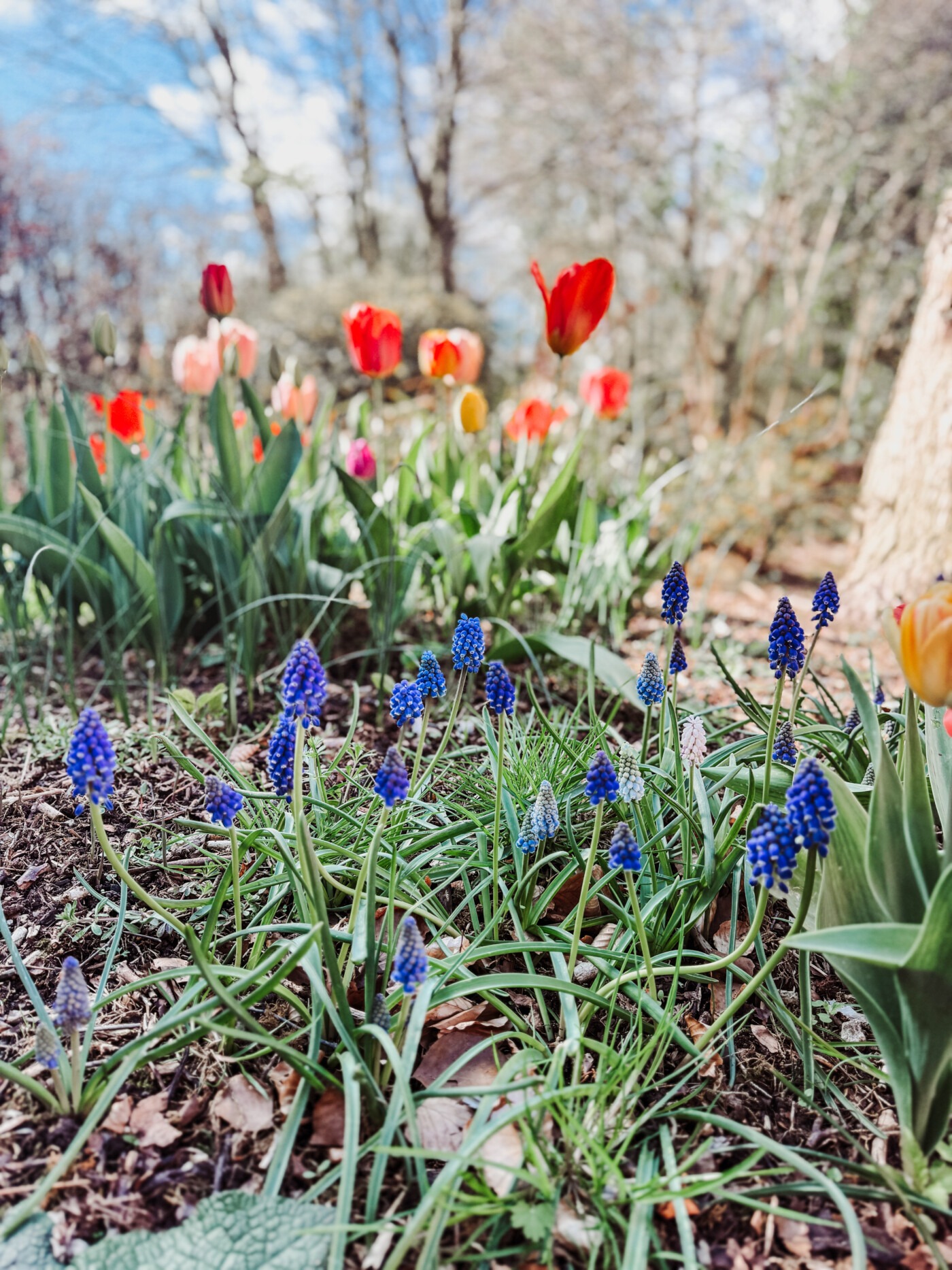
Spring bulbs are finishing up, herbaceous plants are putting out new growth, and everything is hungry after a long winter. Now is the perfect time to top-dress beds with compost or well-rotted manure, which slowly feeds plants and improves soil structure.
I’m also deadheading daffodils and other spring bulbs so they put energy into next year’s flowers instead of making seeds.
For established perennials and deciduous shrubs, I’m mulching around the base with a thick layer of organic matter. It suppresses weeds, holds moisture throughout the coming months, and slowly breaks down to feed roots all season. I also put grass clippings around throughout the year, and the leaves as we get into the colder months.
Quick wins this month:
- Feed roses with a balanced fertiliser to fuel strong growth and summer blooms.
- Mulch around fruit trees to conserve water and suppress grass competition.
- Cut back any dead growth on herbaceous plants that you left over winter for structure.
- Plant summer-flowering bulbs like dahlias and gladiolus for colour later in the year.
April is the bridge between planning and payoff. Everything you sow, plant, and protect this month sets up the harvests and colour you’ll enjoy from June straight through autumn.

The weather is unpredictable, the task list is long, and it’s easy to feel like you’re behind. But if you focus on the big wins like getting seeds started, hardening off properly, protecting against frosts, and staying ahead of weeds, you’ll hit summer with a garden that’s thriving instead of struggling.
The Easter holidays always turn into a big garden reset for us. I feel so much better now we’ve organised everything, and we are prepared for the growing season.
These are great tips. Spring is such an up and down season. You have to take care that your tender plants are protected.
Amazing tips especially since we’re about to start prepping for this season in our garden. We’re planning a trip to the nursery on Saturday.
This is such a realistic take on April gardening. That “everything at once” pressure is very real.
Thank you for all of your great planting tips. I always feel so proud when I have managed to grow anything from seed. Gardening is good for the soul!
I am hearing for the first time that April is the best month to gardening in the UK. April is a summer month in where I live and love your planting tips.
I plan to plant some tomato seeds this month too once I get hold of some soil. I’ve not planted salad leaves before, glad you mentioned that, I might get some seeds and plant some of those too!!!
It has been so warm here as if late and this past weekend everyone was out in northeat PA getting their gardens in order but this week we have frost. I guess it is the chance you take LOL…. but I love gardening and love the look of your seedlings and such and hope they grow beautifully for you. Nothing better!
I really need to decide if I want to do vegetables this year! It just feels like last year our garden got taken over by a giant pool, lol.
I never seem to start my seeds off at the right time. Thanks for the reminder I need to get out there and start!
Ooo this post is perfect for me as I’m wanting to get some stuff grown in the garden this year and have no idea where to start! Will be going the garden centre tomorrow 🙂
Our April weather is Saskatchewan has been crazy 26C one day- then snow the next day. I’m trying to start some seeds inside – but I keep getting teeny flies.
Prayers appreciated!