I’ve been painting with watercolour for a while now, and if you’ve read any of my painting posts, you’ll know how much I’ve thrown myself into it. But there’s been something sitting in the back of my head for a while: acrylic. The two mediums are completely different in how they behave, and I wanted to try both.
So I’ve started, and I have thoughts. Here’s what I’ve painted so far, plus a rundown of the acrylic painting supplies for beginners that I’d actually recommend if you’re thinking about giving it a go.
My First Two Paintings
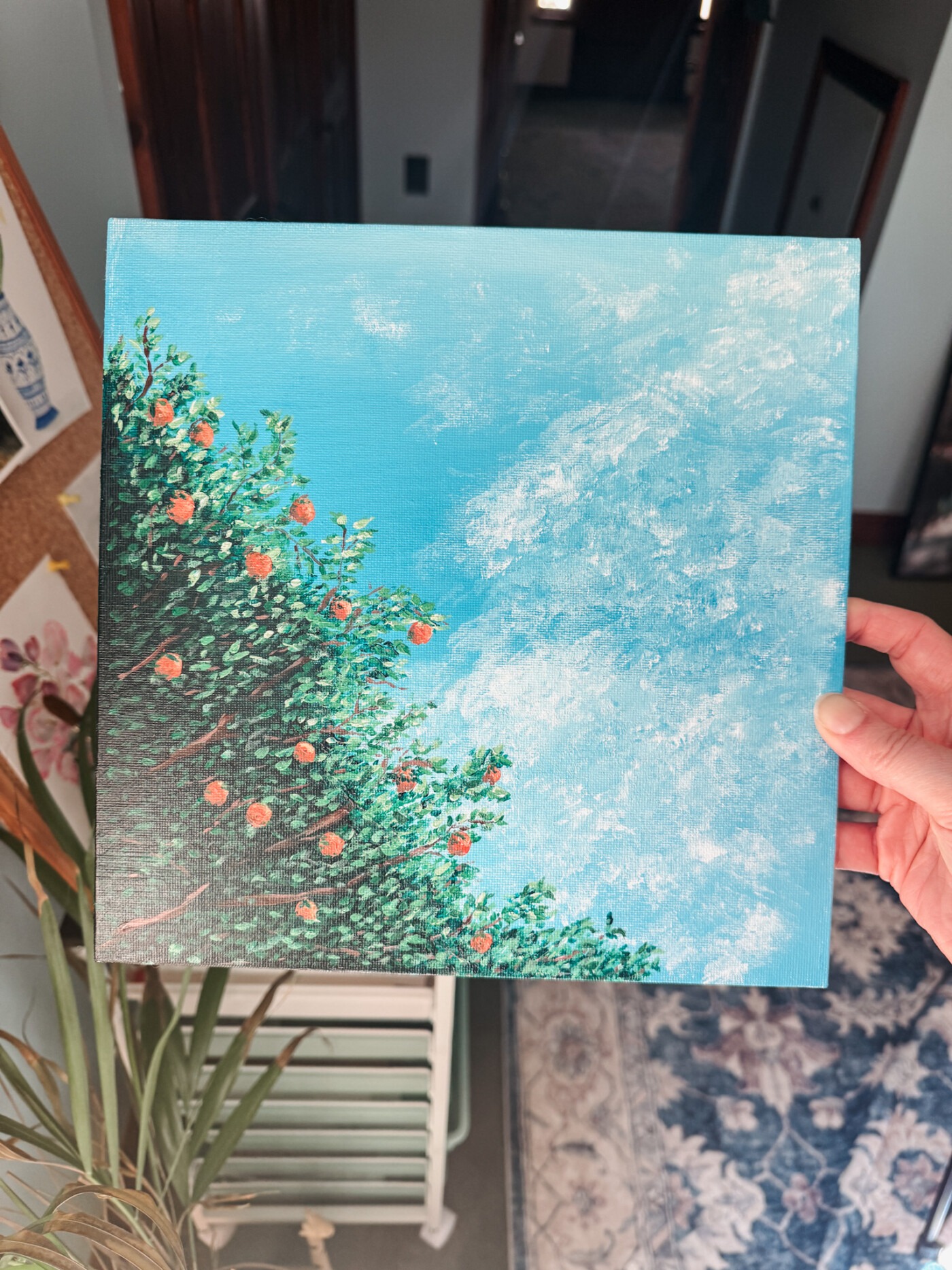
The first piece I painted was an olive tree, leaves spreading across the left of the canvas with sky opening up behind. I really enjoyed this one. Acrylic is so much more forgiving than watercolour in some ways, because you can go back over what you’ve already painted, layer on top, correct things that aren’t working. You can paint dark over light, which is the complete opposite of how watercolour works and took a bit of adjusting to.
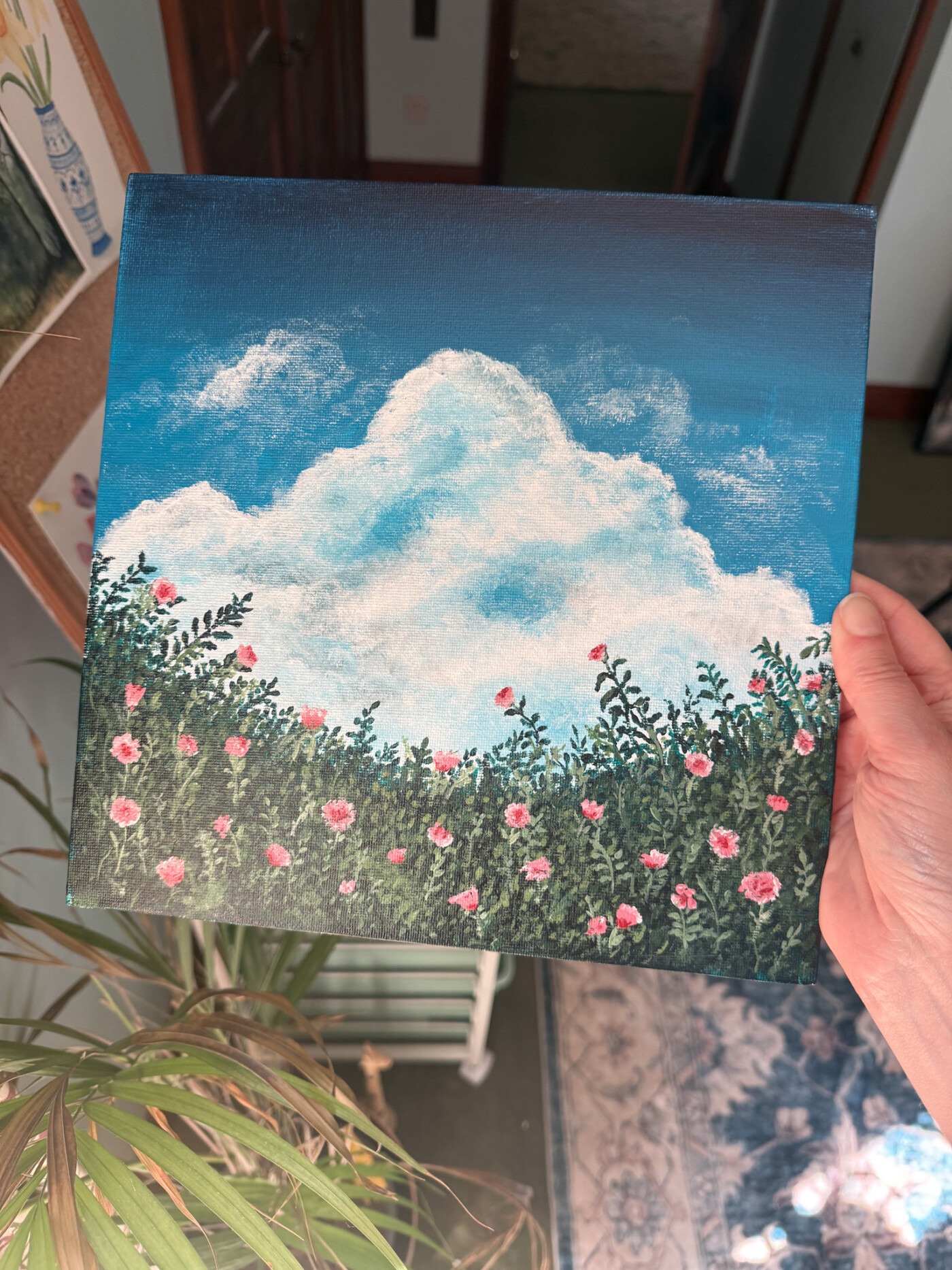
The second piece is pink flowers among bushes, again panning up into the sky with a big cloud. I’m pleased with how the sky came out on this one. Getting the soft edges on clouds in watercolour is mostly about working wet-into-wet and crossing your fingers. In acrylic, you have a lot more control, and I found blending much easier once I stopped trying to do it the watercolour way.
I can’t wait to look back on these in a few months and hate them! I say that in the best way possible. When I first started watercolour painting, there were some pieces I were proud of at the start. But when I look at those now, I can see how bad they are! That’s because I’ve improved and have more experience. Although I like these acrylic paintings now, I can’t wait to see how I develop over the next few months!
A Word About the Kit I Bought
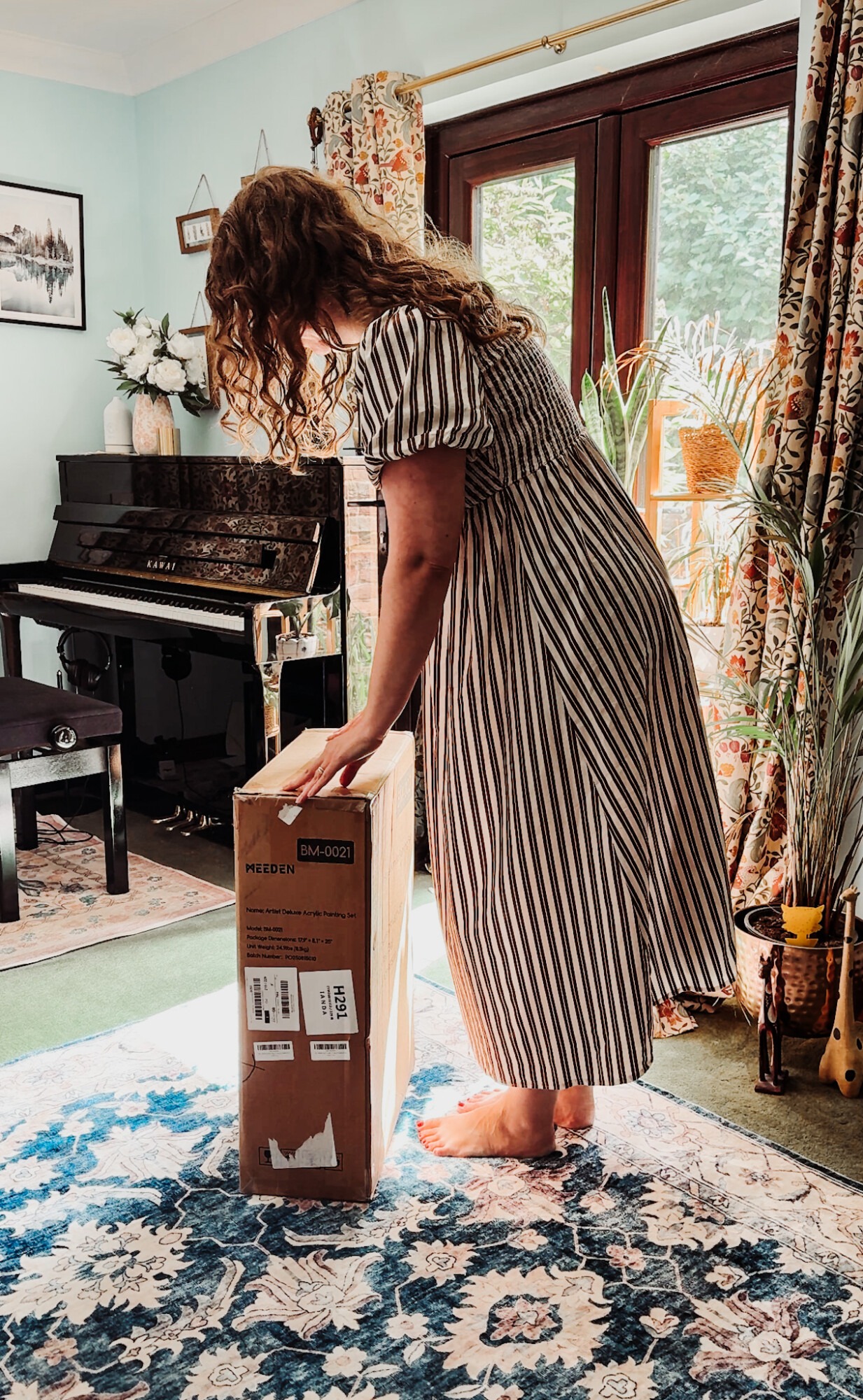
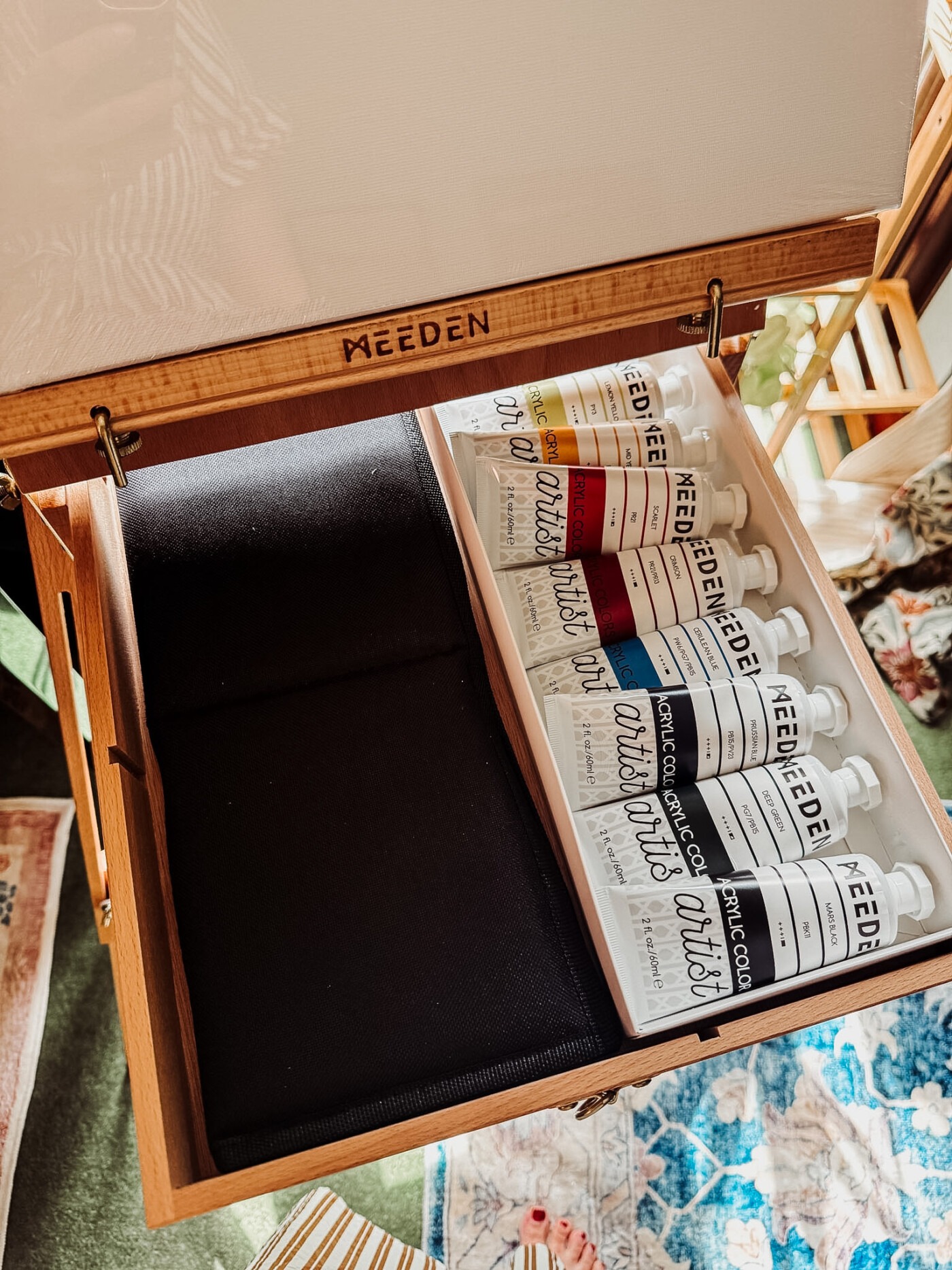
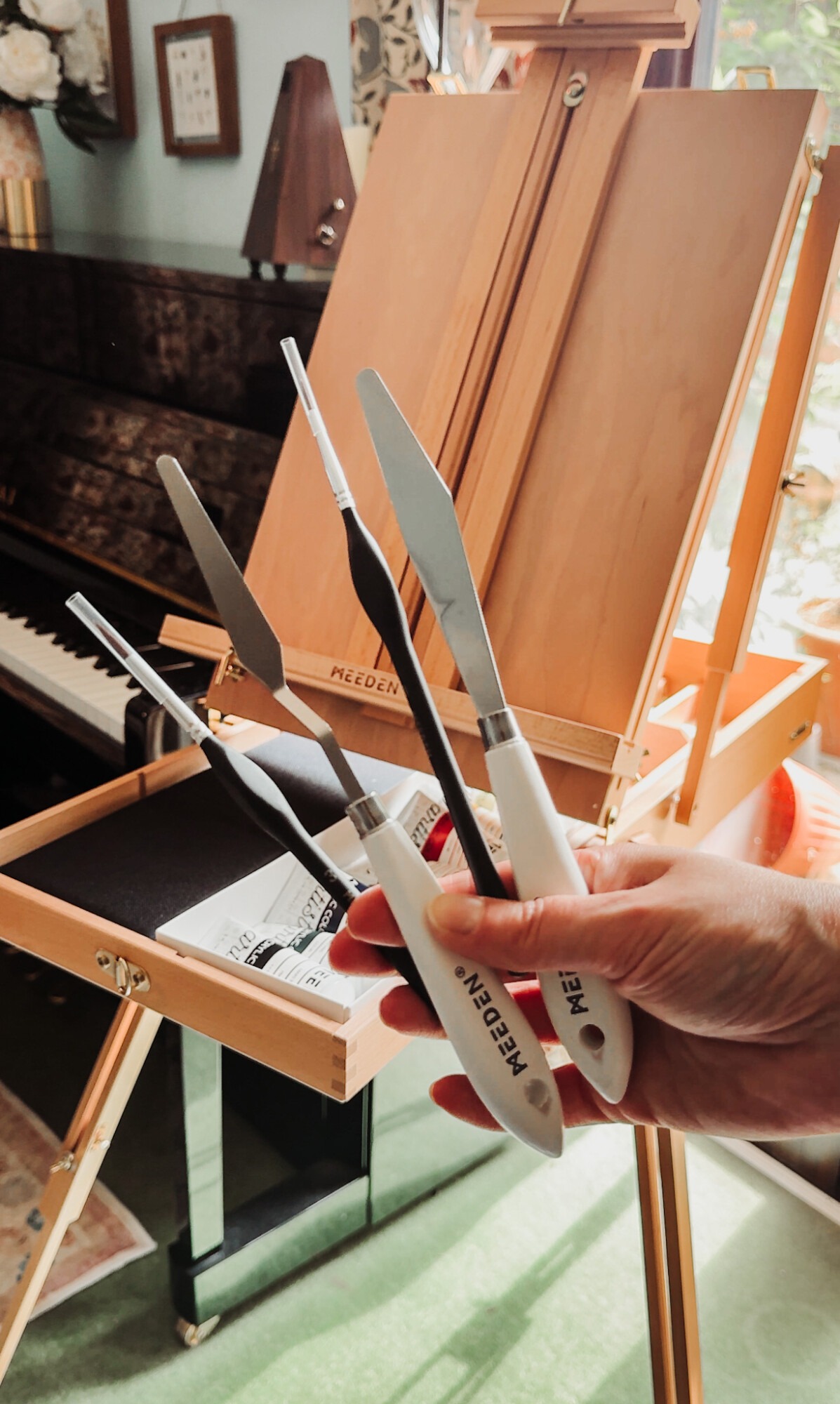
I bought a professional artist set from Meeden, which I cannot recommend. The product listing included a number of items that weren’t in the box when it arrived, and when I got in touch, I found out they’d changed the contents of the set without updating the website. They initially offered me £30, which wasn’t enough to cover what was missing, so I pushed back. They came back with £57, and I paid about £150 for the kit, so it still doesn’t fully cover everything. The customer service was reasonable once I got past the first offer, but I did have to argue my way there. Read the product description carefully with Meeden before buying, and check what’s actually listed to arrive.
I’m flagging it because if you’re buying a starter set and some things are missing, you won’t know what you’re missing until you go to use them. I’ll cover the essentials below so you know what to look for.

Acrylic Painting Supplies for Beginners
Canvas or Canvas Boards
There’s a difference worth knowing about here. Canvas boards are usually cheaper, but if you want to hang or display them, you’ll need to buy frames separately or find another way to attach them to the wall. Stretched canvas costs a bit more upfront but can go straight on the wall without anything extra, so depending on what you’re planning to do with your paintings, it can actually work out cheaper overall.
I’d recommend something like this as a starting point, with a good mix of sizes to experiment with.
Acrylic Paints
Like watercolour, there are different grades of acrylic paint: craft, student grade, artist grade, and professional. The main difference as you go up the scale is the amount of pigment in the paint. More pigment means richer, more consistent colour.
I’m using artist-grade paints, and I’ve also picked up some Windsor & Newton Galeria (their premium student grade) secondhand from Vinted, where loads of people sell unused art supplies. Once I run out of what I’ve got, I’ll replace tube by tube with the professional range rather than buying a whole set again.
One thing I’d genuinely recommend to anyone starting out: don’t buy too many colours. Start with less and you’ll learn more. The three primaries (red, yellow, blue) plus black and white will take you a long way, and you learn more about colour theory from mixing than you ever would from having a tube for everything. The downside is that if you mix a custom shade and run out before you finish a painting, matching it again can be tricky — so it’s a balance.
The one colour I really miss not having is sap green. It’s one of my most-used in watercolour and I keep noticing its absence whenever I’m working on anything with leaves or foliage. I’ve found one on Vinted so it’ll be joining the collection soon. Worth adding early if flowers, landscapes or anything requiring a lot of greenery is your thing.
This set would be a solid starting point.
A Palette
My set was supposed to include a wooden palette and a pad of palette paper — disposable sheets you place over the wood and throw away afterwards, since acrylic dries hard and is much harder to clean off than watercolour. The wooden palette wasn’t in the box, so I’ve been using the palette paper sheets clipped to a paddle-shaped chopping board, which has worked really well. You can use almost anything to mix on as long as you have a surface.
Once I’ve finished this pad, I’m going to invest in a stay-wet palette. These have a spongy, water-saturated layer underneath the mixing surface, which keeps your paint usable for days rather than having it dry out between sessions. It’s more of an issue with acrylic than watercolour because once acrylic dries, it’s gone. You can’t reactivate it with water the way you can with watercolour.
My biggest frustration so far is wasted paint. Squeeze out too much and you’re throwing it away when it dries. Squeeze out too little and you run short mid-mix. It’s an ongoing calibration. I use this pad.

A Palette Knife
I think this is essential. Mixing with a brush means paint works its way up into the bristles, and you end up wiping most of it away, which wastes paint and dirties your water faster. A palette knife lets you mix properly on the surface, then wipe clean with a tissue. Much more efficient.
It’s also really useful for spreading paint across a large background area, where you want smooth, even coverage rather than brushstrokes.
Brushes
The set I bought came with long-handled brushes, which makes sense because it also included an easel. Long handles are better for standing up at an easel. You can hold them further back, step away from the canvas, and see the whole painting rather than being right up close to it. If you’re sitting at a table, shorter handled brushes are more comfortable.
Beyond that, you want a mixture of shapes and sizes: round brushes for detail and curved strokes, flat or bright brushes for broader coverage, fan brushes for blending and texture, and angled brushes for edges. Detail brushes are a must for fine work. What I’d do is start with a cheap variety set that covers all the main shapes, learn what each one actually does, and then replace with better quality ones as they wear out. Acrylic is harder on brushes than watercolour — the paint dries fast and the bristles wear more — so there’s no point buying expensive brushes until you know which ones you actually use.
Something like this gives you a good variety including a palette knife.
Everything Else
Water, obviously — but you’ll need to change it more often than with watercolour since it gets murky quickly and dirty water affects your colours. A cloth or paper towels to clean brushes between colours. And after cleaning a brush, blot it on a white paper towel or scrap paper to check it’s actually clean before you go back into the paint.
What I’m Still Learning
Quite a lot. Dry brushing is on the list — using a brush with very little water to create texture and a rough, unblended effect. Getting better at detail. Understanding which techniques need more water and which need less. I’ve been watching loads of beginner tutorials on YouTube, and it’s one of the best things you can do. Search for ‘beginner acrylic painting tutorials’, pick a few different teachers until you find someone whose style you like, and then follow step by step videos to learn technique as you go rather than trying to work it all out from scratch.

I’ve been painting with watercolour long enough now to know that the best way to learn is to make things and notice what isn’t working. Acrylic is different enough that I’m starting that process again from a slightly different angle, which is actually quite enjoyable. Slightly humbling, but enjoyable.
If you’re at the same stage, this post on starting watercolour is worth a read for the general mindset around picking up a new painting medium, even if the specifics differ. And if you want to understand more about paint grades and colour choices, my watercolour palette post covers a lot of the same thinking that applies here.
I’ll keep posting as I get further into it. If you’re just starting out with acrylic too, let me know in the comments — I’d love to know what you’re working on.
Related: