Kitchen cabinets are one of the most essential forms of storage in your home. They provide a designated space for storing kitchenware and ingredients so that you can easily access everything you need while cooking, while also protecting the contents from pests
Updating cabinets may be necessary if you’re running out of storage space or if your current cabinets are damaged or dated. To help choose the right cabinets for your kitchen, here are some of the important things to consider.
Stock or custom cabinets?
Stock cabinets are generally the most affordable option. These are mass-produced cabinets that come in a certain size and style. Some stock cabinets are flat-pack and can be assembled oneself, while others already come preassembled.
Custom cabinets can be fully personalised to your needs. They cost more than stock options, but can be a better choice if you have a specific vision in mind or an oddly-shaped kitchen. There are many kitchen designers that can help you to design, build and install custom cabinets.
Getting the size right
Getting the dimensions right is essential. Take your time to measure your kitchen to determine exactly how much space you have to work with. This includes determining the length, height and the depth of your cabinets.
Some homeowners like to extend overhead cabinets all the way up to the ceiling, while others prefer to keep a gap above. With lower ceilings, it is typically better to extend all the way to the ceiling to maximize space. If you have a narrow kitchen, you may want to consider shallower cabinets – if they extend out too much, you won’t have much space to stand and walk around. That said, they need to be deep enough to suitably store plates and pans.
Which material should you choose?
Kitchen cabinets can be built out of a variety of different materials. Each of these materials has different perks and drawbacks. It’s possible to divide these materials into three categories:
Solid wood
Solid woods like oak, maple, cherry and hickory have a natural and warm aesthetic and are very durable. However, this material comes at a high cost. Natural woods also require regular sealing to protect them from moisture damage. They can be the best choice in older homes or kitchens with a rustic touch.
Composite wood
Composite woods like plywood and MDF can mimic the look of natural wood at a fraction of the price. This material combines timber and synthetic materials – it is not as durable as solid wood, but can be more resistant to humidity. Composite wood cabinets are also often easier to customise and are available in traditional and modern styles.
Synthetic
Wholly synthetic materials like acrylic can also be used to construct cabinets. Such materials are highly resistant to moisture and scratches and have a high-gloss finish that can help to catch the light while being easy to wipe clean. The downside of materials like acrylic is that they can yellow over time if not UV-protected. This material is best suited to modern kitchens.
What colour and finish?
It’s important to consider the colour of your cabinets. Ideally, you want something that will complement the rest of your kitchen decor. Neutral colours like white and grey are very popular and tend to be a safe choice when it comes to considering resale value (bolder colours like blue, red and green may appeal to less people).
With wooden cabinets, it’s possible to keep them unpainted to showcase the grain of the wood. Alternatively, you can opt for a high-gloss paint to give timber the texture of acrylic. Matte paints can meanwhile provide a flatter and more subtle look. Distressed cabinets are also an option in older properties – these are intentionally weather in order to look vintage.
Choosing a door style
Kitchen cabinet doors come in several different styles. This is also important to consider when shopping for new cabinets to make sure that your cabinet’s fit your home’s style. Some of the most popular styles include:
Flat panel
Also known as slab cabinets, these cabinet doors are completely flat with no indentations. They are a minimalist solution that is easy to clean.
Shaker
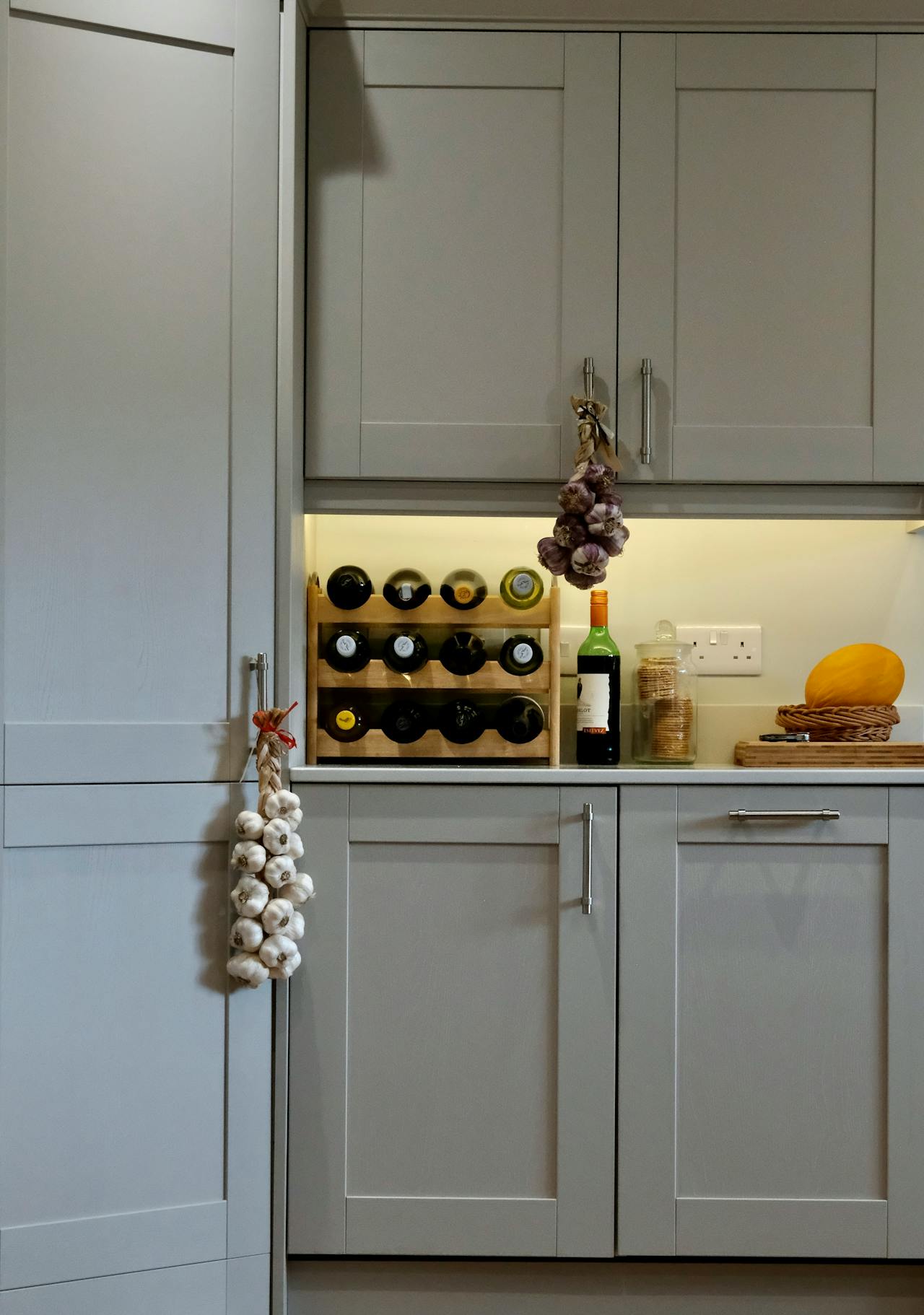
Shaker doors consist of a rectangular frame and recessed centre panel. They are a versatile style of door that can suit both modern and traditional kitchens.
Louvred
Louvred cabinet doors contain angled slats that can help to improve ventilation – preventing moisture build-up in cabinets and providing a stylish look.
Glass panel
You could also consider cabinet doors with glass panels. This allows you to easily identify the contents of each cabinet, while still keeping out pests.
Beadboard
These cabinet doors have panels consisting of vertical strips. This gives cabinets an elongated look, which can add the illusion of extra height to a low-ceilinged kitchen.
Additional features to consider
There may be other details to consider when customising your cabinets. A few popular features that could be worth looking into include:
- Soft-close hinges/drawers: Springs and hydraulic dampeners can be fitted to cabinets and drawers to prevent them from slamming – instead causing them to automatically slide close slowly when they reach a certain point. This is a worthwhile feature to consider if you have young kids.
- Pull-out shelves: Cabinets can be fitted with pull out shelves, which can make it easier to access food or kitchenware. Pull-out shelves are a good choice for corners of kitchens, which can be awkward to reach into.
- Integrated appliances: Appliances like ovens, fridges and dishwashers can be integrated seamlessly into your cabinetry. Hiding away appliances behind cabinet doors could be particularly effective at preserving the vintage look of a traditional kitchen in a historic home.
- Under cabinet lighting: Lighting can be installed under cabinets to brighten up countertops when preparing food.
Conclusion
Don’t rush into buying new kitchen cabinets. By taking your time to consider the size, material, colour, finish, door style and additional features, you can be sure to choose cabinets that serve your needs and that you continue to love for many years.